
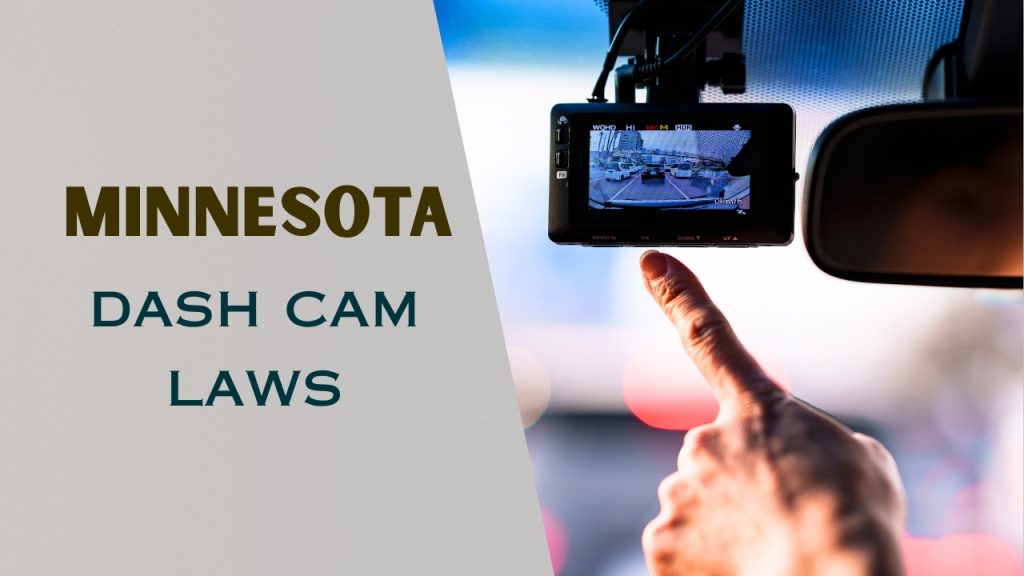
Wondering whether a dash cam is legal to use on your daily commute through Minneapolis or St. Paul? Minnesota dash cam laws generally allow drivers to install and use these devices, but placement, recording consent, and privacy rules all come with specific limits. Understanding these rules before you mount a camera can help you avoid a traffic citation or a privacy dispute down the road.
Who Can Legally Install and Use a Dash Cam
Minnesota law does not require a special permit to use a dash cam. Any driver, whether commuting in Duluth or hauling freight through Rochester, can install one for personal safety, insurance documentation, or ridesharing purposes.
Rideshare and delivery drivers often use dash cams to protect against liability claims. Employers may also require dash cams in commercial vehicles, though company policies should align with state privacy expectations.
Windshield Placement and Mounting Rules
Minnesota restricts objects that obstruct a driver’s clear view through the windshield. Under state law addressing windshield obstructions, devices should be mounted in a location, typically low on the windshield or on the dashboard, that does not block the driver’s line of sight.
Placing a dash cam near the rearview mirror, within a small designated mounting area, is generally the safest approach. Officers in cities like Bloomington or St. Cloud can cite drivers whose mounted devices materially obstruct visibility.
Flag for verification: the exact permissible mounting zone and size restrictions under Minnesota’s windshield obstruction statute should be confirmed against current code language before publication.
Recording and Privacy or Consent Laws
Video recording from a dash cam while driving on public roads is legal, since there is generally no reasonable expectation of privacy on a public street. This covers footage captured in traffic in areas like Bloomington or downtown Minneapolis.
Audio recording is more sensitive. Minnesota follows a one-party consent standard for recording conversations, meaning at least one participant, which can include the driver, must consent to the recording. Recording a private conversation between others without any party’s consent can violate state wiretapping law.
Drivers who use dash cams with audio features should be cautious about capturing conversations inside their own vehicle when passengers are unaware, particularly for rideshare drivers operating in dense areas like St. Paul.
Penalties for Misuse or Improper Installation
Improperly mounting a dash cam so that it obstructs the windshield can result in a traffic citation, similar to other equipment violations.
Unlawful audio interception under Minnesota’s wiretapping statute can carry more serious consequences, potentially including criminal charges.
Flag for verification: specific fine amounts for windshield obstruction violations and the precise criminal penalties, including any felony classifications, under Minnesota’s wiretapping statute should be verified against current statutory text before publication.
Final Thoughts
Minnesota dash cam laws strike a balance between allowing drivers to document the road and protecting individual privacy. Mounting a camera without obstructing your view and being mindful of audio consent rules will keep most drivers, from Duluth to Rochester, on solid legal ground.
This article is for informational purposes only and does not constitute legal advice. Consult a licensed Minnesota attorney for guidance specific to your situation.