
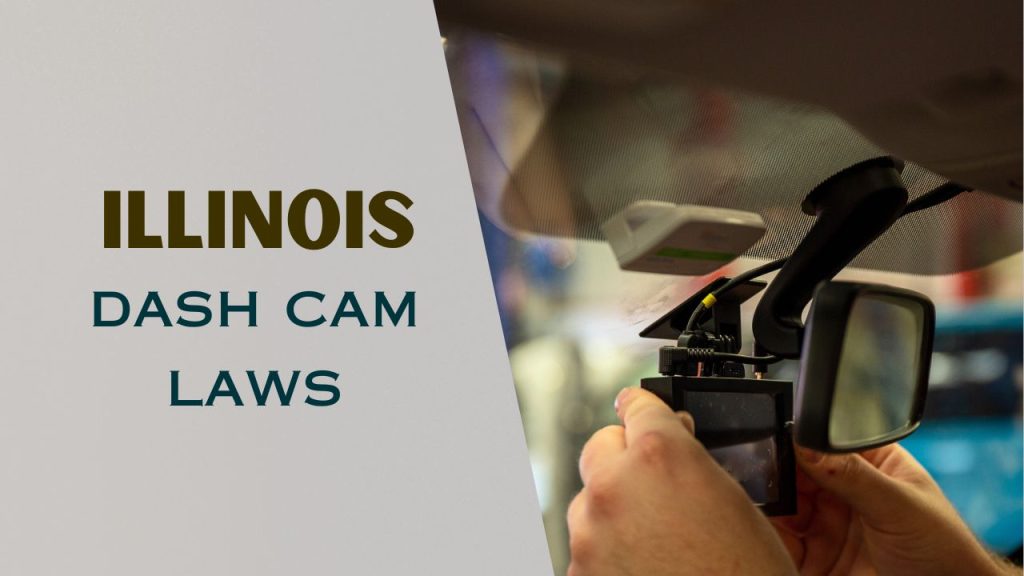
Drivers across Chicago, Springfield, and Peoria are increasingly turning to dash cams for added protection on the road, but Illinois dash cam laws involve more than simply mounting a camera and hitting record. Illinois regulates where a device can sit on the windshield and how recordings involving audio may be used, so understanding both rules matters before installing one.
Who Can Legally Install and Use a Dash Cam
Illinois law does not prohibit private drivers from installing or using a dash cam in a personal vehicle. Both drivers and passengers may use one, and there is no license or permit requirement.
Rideshare and commercial drivers in cities like Rockford and Naperville commonly use dash cams for liability protection, and this is generally permitted as well. Employers who require dash cams in company vehicles should still ensure any audio recording complies with state consent rules, covered below.
Windshield Placement and Mounting Rules
Illinois restricts objects that obstruct a driver’s clear view through the windshield. Under state law, devices mounted on the windshield must not interfere with the driver’s line of sight.
Practical placement guidance for compliance:
- Mount the device near the top center of the windshield, behind the rearview mirror
- Avoid placing it low or near the edges where it could block traffic signals or pedestrians
- Keep the mounting bracket small and unobtrusive
The exact statutory language governing windshield-mounted devices and any specific size or placement thresholds should be verified against current Illinois Vehicle Code provisions before publishing, as these details can be updated.
Recording, Privacy, and Consent Laws
Video recording from a dash cam while driving on public roads is generally permitted, since there is no reasonable expectation of privacy in what is visible from a public street.
Audio recording is more sensitive. Illinois has an eavesdropping law that has historically required consent from parties to a private conversation before it can be recorded. This matters for dash cams that capture in-cabin audio of passengers or conversations with others, such as during a traffic stop.
Drivers in the Chicago and Aurora areas who plan to record audio inside the vehicle should consider notifying passengers that recording is taking place.
The precise consent requirements and any recent amendments to the Illinois eavesdropping statute should be verified before publishing, since this area of law has changed in past years and specific thresholds affect compliance.
Penalties for Misuse or Improper Installation
Improperly mounting a dash cam in a way that obstructs the driver’s view can result in a traffic citation, similar to other windshield obstruction violations.
Recording private, in-person conversations without required consent can carry more serious consequences, potentially including criminal charges under Illinois eavesdropping law, depending on the circumstances.
Specific fine amounts and penalty classifications for windshield obstruction violations and eavesdropping violations should be verified against current Illinois statutes before publishing.
Final Thoughts
Dash cams can be a valuable tool for Illinois drivers in Chicago, Peoria, Rockford, and beyond, offering documentation in the event of an accident or dispute. Following windshield placement guidelines and understanding the state’s audio consent rules helps drivers use these devices without running into legal trouble.
This article is for informational purposes only and does not constitute legal advice. Consult a licensed Illinois attorney for guidance specific to your situation.