
Drivers across Atlanta, Savannah, and Augusta increasingly rely on dash cameras for protection after accidents. Georgia dash cam laws govern where these devices can be mounted, what they can record, and how footage may be used, and understanding them helps drivers avoid fines or evidence disputes.
Understanding Georgia’s Dash Cam Rules
Georgia does not ban dash cameras outright. Instead, use falls under traffic safety statutes covering windshield obstructions and state wiretapping laws covering audio and video recording. Drivers in Macon and Columbus should know both before installing a device.
Statute numbers below should be verified against current Georgia Code (O.C.G.A.) before publication, since traffic and privacy statutes are periodically amended.
Who Can Legally Install and Use a Dash Cam
Any licensed driver in Georgia can install and operate a dash cam in a personal vehicle. No permit or registration is required for the device.
Rideshare and commercial drivers in Atlanta often use dash cams for liability protection, and this is generally permitted as long as placement and recording rules are followed. Employers requiring dash cams in company vehicles should still meet the same consent and mounting standards.
Windshield Placement and Mounting Rules
Georgia restricts objects that obstruct a driver’s clear view through the windshield, similar to many other states. A dash cam mounted too low, too large, or outside designated clearance areas near the top or bottom of the windshield may violate obstruction rules.
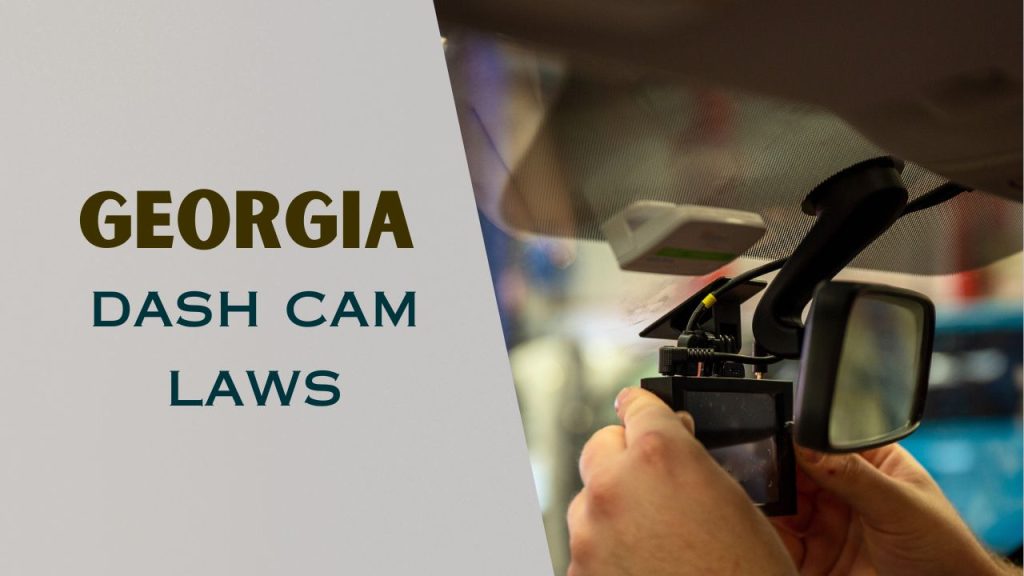
Best practice for drivers in Savannah or Athens is to mount the camera behind the rearview mirror, keeping it small and out of the direct line of sight. This reduces the risk of a citation and keeps the camera’s view unobstructed.
Exact windshield clearance measurements should be confirmed against current Georgia obstruction statutes before treating this as precise guidance.
Recording and Privacy or Consent Laws
Video Recording
Georgia allows video recording in public spaces, including roads and highways, without consent. A dash cam capturing footage through a windshield while driving generally does not raise privacy concerns since there is no reasonable expectation of privacy on public roads.
Audio Recording and Consent
Audio is treated differently. Georgia is a one-party consent state, meaning at least one participant in a conversation, which can be the driver, must consent to being recorded.
Recording others without any party’s consent, such as a rideshare passenger’s private call, could raise issues under Georgia’s wiretapping statute. Drivers using audio-enabled dash cams with passengers, particularly in Atlanta rideshare or delivery work, should disclose that recording is happening.
Penalties for Misuse or Improper Installation
A dash cam that obstructs the windshield can result in a traffic citation, similar to other obstruction violations. Fines vary by jurisdiction and whether the obstruction contributed to a broader traffic stop.
Illegal audio recording without consent can carry more serious consequences, since violations of Georgia’s eavesdropping laws may be charged as a misdemeanor or, in some cases, a felony.
Specific fine amounts and criminal classifications should be verified through current Georgia Code before being presented as authoritative figures.
Final Thoughts
Dash cams offer real protection for Georgia drivers, from documenting accidents in Columbus to resolving disputes on Atlanta highways. Following windshield rules and the state’s one-party consent standard helps drivers avoid legal trouble.
This article is for informational purposes only and does not constitute legal advice. Drivers with specific questions about dash cam use or recording laws should consult a licensed Georgia attorney or refer to official state resources.