
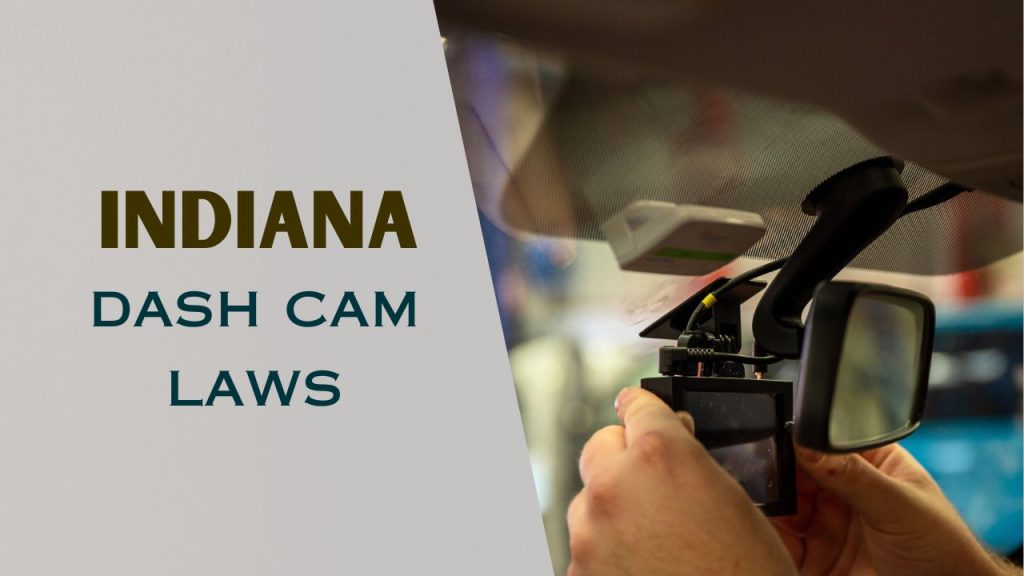
Drivers across Indianapolis, Fort Wayne, and Evansville are turning to dash cameras for protection after accidents and disputes on the road. Understanding Indiana dash cam laws helps drivers install and use these devices without running into legal trouble. This guide breaks down installation rules, recording restrictions, and privacy considerations under Indiana law.
Who Can Legally Install and Use a Dash Cam
Indiana does not require a permit or license to own or operate a dash cam. Any driver may install one in a personal or commercial vehicle for personal use, insurance documentation, or ridesharing purposes.
Rideshare and delivery drivers in cities like South Bend and Bloomington often use dash cams to record interactions with passengers, though separate consent rules may apply to audio recording, discussed below.
Windshield Placement and Mounting Rules
Indiana law restricts objects that obstruct a driver’s clear view through the windshield. Dash cams should be mounted in a location that does not block the driver’s line of sight, typically near the top center of the windshield behind the rearview mirror.
Mounting a dash cam too low or too wide across the windshield could be considered a violation of Indiana’s windshield obstruction rules. Suction-cup or adhesive mounts near the mirror are the safest placement choice.
Note: The exact statutory citation and permitted obstruction dimensions should be verified against current Indiana Code before publishing, as enforcement details can vary by jurisdiction.
Recording and Privacy/Consent Laws
Indiana is a one-party consent state for audio recording. This means only one participant in a conversation, including the driver, needs to consent for the recording to be legal. Drivers can generally record conversations happening inside their own vehicle without notifying passengers.
Video-only recording of public roads and traffic carries no expectation of privacy, since anything visible from a public roadway can typically be recorded without consent.
Recording inside private property, such as through someone’s window or in spaces with a reasonable expectation of privacy, raises separate legal concerns and should be avoided.
Note: The specific Indiana wiretapping statute governing one-party consent should be confirmed for accuracy before publishing.
Penalties for Misuse or Improper Installation
Using dash cam footage to harass, stalk, or illegally surveil another person can expose a driver to criminal charges under Indiana’s harassment or invasion of privacy statutes.
Improperly mounted dash cams that obstruct the windshield may result in a traffic citation if a law enforcement officer determines the device impairs visibility.
Unauthorized audio recording of conversations where no party consents, such as secretly placing a recording device in someone else’s vehicle, can result in wiretapping charges.
Note: Exact fine amounts and penalty classifications for windshield obstruction violations should be verified against current Indiana statutes.
Final Thoughts
Dash cams offer valuable protection for Indiana drivers, from documenting accidents to providing evidence in disputes. Following proper mounting guidelines and understanding the state’s one-party consent rule helps drivers use these devices legally and effectively.
Drivers with questions about how dash cam footage may affect a specific legal situation should consult a licensed Indiana attorney.
This article is for informational purposes only and does not constitute legal advice.