
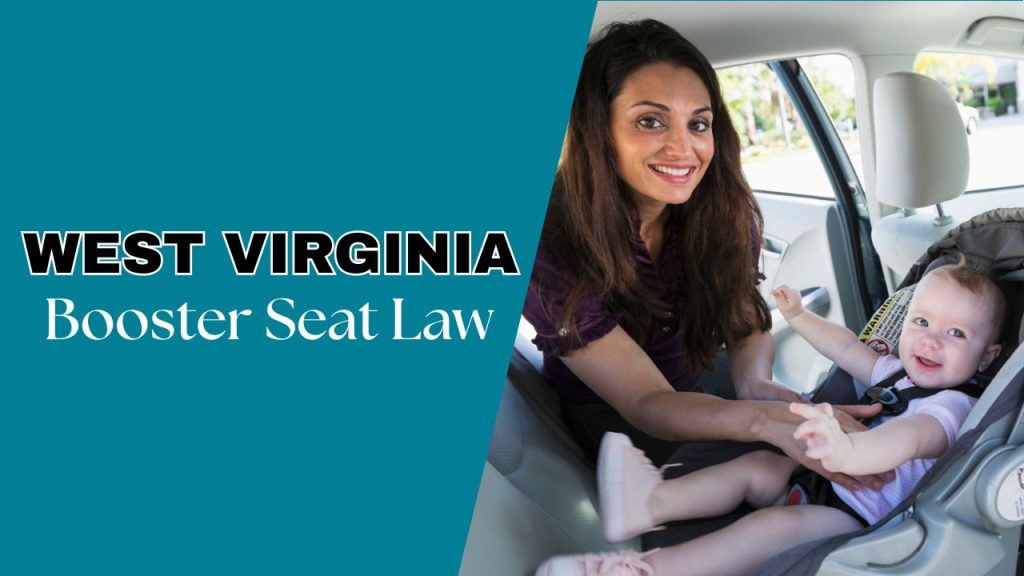
If you are a parent driving through Charleston, Morgantown, or the winding roads near the New River Gorge, understanding car seat rules matters more than most drivers realize. West Virginia law for booster seats is straightforward on paper, but it trips up plenty of families because of one specific height exception most parents never expect.
This guide breaks down exactly what West Virginia Code requires in 2026, who needs a booster seat, and when your child can legally move to a regular seat belt.
What West Virginia Law Actually Requires
Under WV Code Section 17C-15-46, every driver transporting a child under eight years old in a passenger car, van, or pickup truck must properly secure that child in a child passenger safety device meeting federal safety standards. That includes rear-facing seats, forward-facing harness seats, and booster seats depending on the child’s stage of development.
The Core Age Rule
Any child under eight years old must generally ride in an appropriate child safety seat or booster, not just a standard seat belt.
The Height Exception Parents Miss
The law includes one important carve-out. If a child is under eight but has already reached four feet nine inches tall, a regular seat belt legally satisfies the requirement. Height, not age alone, decides when the booster requirement ends.
Booster Seat Stages for West Virginia Families
While the statute sets the legal floor, safety organizations including NHTSA and Safe Kids Worldwide recommend a staged approach so children get the most protection at each size.
Rear-Facing Seats
Keep infants and toddlers rear-facing as long as their seat’s height and weight limits allow, generally until around age two.
Forward-Facing Harness Seats
Once a child outgrows the rear-facing limits, a forward-facing seat with a five-point harness is the safer next step, typically through around age four.
Booster Seats
After outgrowing the harness seat, children usually move into a booster until they meet West Virginia’s legal exit point of age eight or four feet nine inches, whichever comes first.
When Can a Child Stop Using a Booster Seat in West Virginia
Your child can transition out of a booster once they turn eight years old or reach four feet nine inches tall, whichever happens first.
Even after meeting that legal minimum, the seat belt should sit low across the hips and snug across the chest, not the neck or stomach, for real protection on West Virginia’s mountain roads and secondary highways.
Penalties for Ignoring the Law
Violating the child passenger safety law is a misdemeanor in West Virginia, carrying a fine between ten and twenty dollars per conviction.
The financial penalty is small, but the safety risk of an improperly restrained child in a crash is not, so compliance matters far beyond avoiding a ticket.
Local Tips for West Virginia Parents
Families across the state, from Huntington to Wheeling, can get low-cost help through county health departments, WIC offices, and local Safe Kids coalitions, several of which host car seat distribution events and free installation checks.
Given West Virginia’s hilly terrain and rural roads, a properly installed booster is one of the simplest ways to protect a child on every trip, whether it is a short drive through town or a longer haul on I-64 or I-79.
Final Takeaway
West Virginia law for booster seats centers on two numbers: age eight and four feet nine inches. Knowing both keeps your family legally compliant and, more importantly, keeps your child properly protected every time you get on the road.