
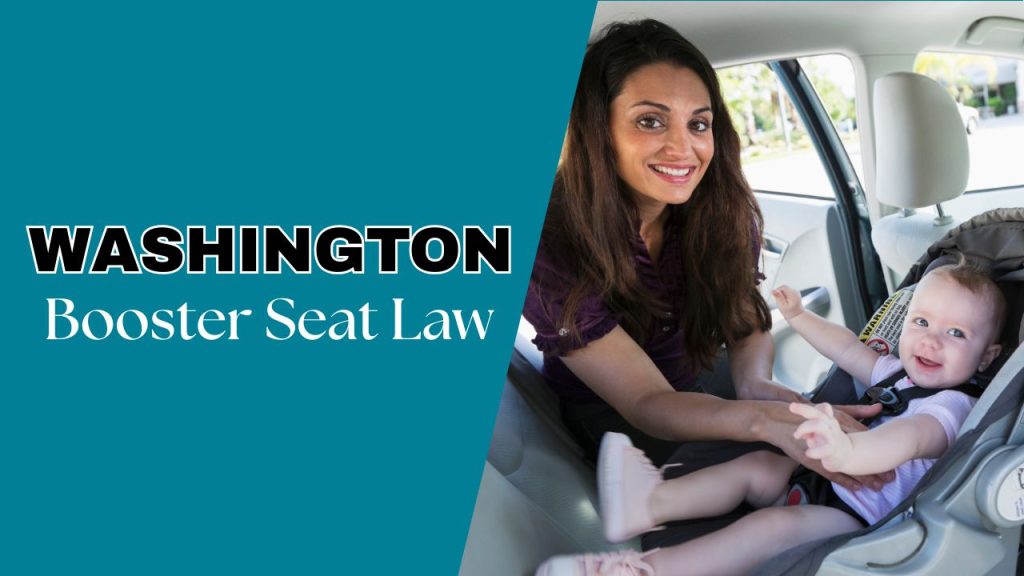
If you drive with kids in Washington, understanding the Washington law for booster seats matters more than ever heading into 2026, especially with law enforcement paying closer attention to child restraint compliance statewide. Whether you live in Seattle, Spokane, Tacoma, or a small town along the coast, the same rules apply everywhere in the state.
What Washington’s Booster Seat Law Actually Says
Washington’s booster seat requirements come from RCW 46.61.687, the state’s Child Restraint Law. This statute lays out exactly which restraint system a child needs based on age, height, and weight, and it applies to any driver transporting a child under sixteen.
Age and Height Requirements
Under current Washington law:
- Children under age 2 must ride in a rear-facing car seat.
- Children ages 2 to 4 must use a forward or rear-facing car seat with a harness.
- Children age 4 and older must remain in a car seat or booster seat until they reach 4 feet 9 inches tall.
- Once a child reaches that height, typically between ages 8 and 12, a properly fitted adult seat belt becomes acceptable.
Weight Considerations
Height is the primary factor Washington uses, but weight still matters. Most booster seats are built for children who have outgrown a harnessed car seat, generally starting around 40 pounds. Parents should always follow the specific weight and height limits printed on the seat itself, since these vary by manufacturer and model.
Back Seat Requirement
Washington law also requires any child under 13 to ride in the back seat whenever practical. This rule exists because front airbags can seriously injure smaller passengers in a crash.
Penalties for Skipping a Booster Seat
Failing to properly restrain a child in Washington can result in a traffic infraction, with fines that commonly run over $120. The law does include a safety net though.
If you show proof of purchasing an approved seat within seven days of the citation, the infraction can typically be dismissed. A missed booster seat also cannot be used as evidence of negligence in a civil lawsuit.
Exceptions to the Law
Washington’s booster seat law does not apply to for-hire vehicles like taxis, school buses, hotel and airport shuttle services, or vehicles operated by licensed auto transportation companies carrying sixteen or fewer passengers.
Why Booster Seats Matter Beyond the Legal Requirement
Booster seats are not just a box to check for Washington drivers. National safety data shows booster seats reduce the risk of serious injury by roughly 45 percent for children ages 4 to 8 compared with seat belts alone. Most kids do not fit an adult seat belt safely until age 10 or 11, even if they meet the minimum legal height sooner.
Practical Tips for Washington Families
- Keep your child in each stage of restraint as long as the manufacturer allows, rather than rushing to the next stage.
- Use the seat belt fit test: lap belt low across the thighs, shoulder belt across the collarbone, never the neck.
- Take advantage of free car seat check events offered throughout Washington by local health departments and fire stations.
- Replace any seat that has been involved in a crash, even if it looks undamaged.
Frequently Asked Questions
At what height can my child stop using a booster seat in Washington?
Once your child reaches 4 feet 9 inches tall, Washington law allows them to transition to a regular seat belt.
Is it illegal to leave a child alone in a car in Washington?
Yes. Washington law prohibits leaving a child under 16 unattended in a vehicle.
Do rideshare and taxi services need booster seats?
No. For-hire vehicles are exempt from Washington’s child restraint law.
Staying current with the Washington law for booster seats helps protect your child and keeps you compliant on the road this year.