
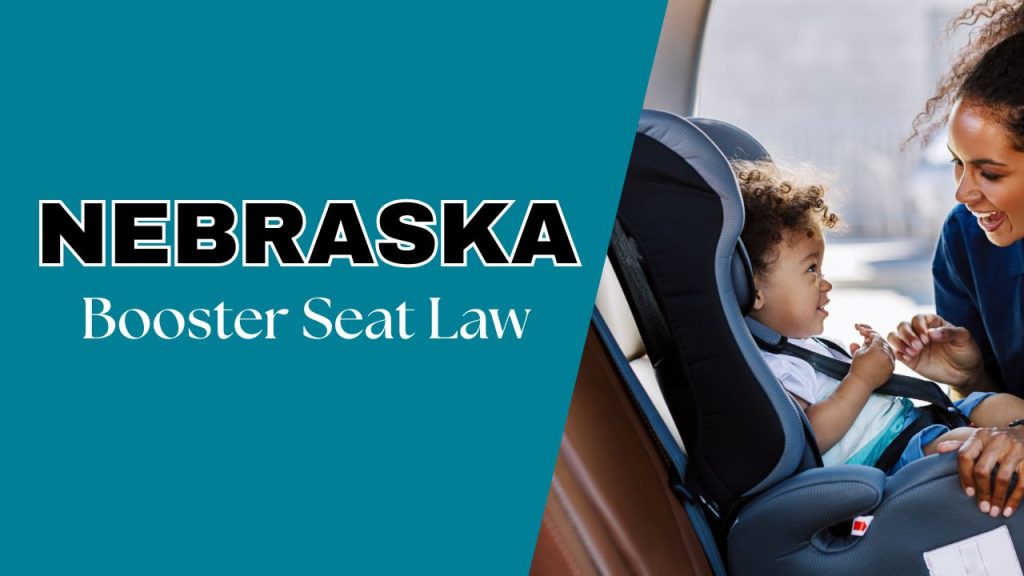
Every parent buckling a child into the back seat has probably wondered whether they are following the rules correctly.
The Nebraska law for booster seats sets clear requirements for children based on age, weight, and height, and knowing these rules can protect both your child and your wallet.
What Nebraska Law Actually Requires
Nebraska Statute 60-6,267 governs child passenger restraints across the state. Under this law, children up to age 8 must ride in a correctly installed car seat or booster seat that meets federal safety standards.
Once a child turns 8, or reaches a height where a seat belt fits properly, they may transition out of a booster and into a regular seat belt.
Rear-Facing Requirement for Younger Children
Children must remain rear-facing until age 2, or until they exceed the height or weight limit set by the car seat manufacturer. This rule applies regardless of how big or advanced a toddler seems.
Booster Seat Requirement for Ages 4 to 8
Once a child outgrows a forward-facing harness seat, typically around kindergarten age, Nebraska law requires a booster seat until age 8. The booster raises the child so the vehicle’s seat belt sits correctly across the collarbone and hips rather than the neck or stomach.
Seat Belt Rule for Ages 8 to 18
Children between 8 and 18 must be secured by either a seat belt or a booster seat if a standard belt does not yet fit well. Many safety experts recommend Nebraska families keep children in a booster until they pass the five-step seat belt fit test, even after the legal minimum age.
Back Seat Placement Rules
Children under 8 must ride in the back seat whenever one is available and equipped with a seat belt, as long as it is not already occupied by another child under 8. This reduces exposure to front airbags, which can injure smaller passengers.
Fines and Penalties
Violating Nebraska’s booster seat law results in a $25 fine plus court costs, along with one point on the driver’s record. While the fine is modest, an improperly restrained child faces a much higher risk of serious injury in a crash.
Exceptions Nebraska Parents Should Know
Nebraska law includes a few exceptions worth noting.
Rideshare and Taxi Drivers
Taxi, Uber, and Lyft drivers are not required to provide car seats or booster seats for passengers.
School Buses
Booster seats are never used on school buses. Vehicles with lap-only belts require a restraint designed specifically for school bus use, not a standard booster.
Are There Changes for 2026
As of now, Nebraska has not enacted new booster seat legislation for 2026. The 2019 provisions, rear-facing until 2, booster or car seat until 8, and back seat placement until 8, remain the current standard.
Parents should still check the Nebraska Department of Transportation website periodically, since child restraint laws are reviewed by lawmakers from time to time.
Practical Tips for Nebraska Families
Always register your car seat with the manufacturer so you receive recall notices. Avoid secondhand seats with unknown crash history.
If you are unsure about installation, free child safety seat inspection events are held throughout Nebraska, staffed by certified technicians who can check your setup at no cost.
Final Thoughts
Understanding the Nebraska law for booster seats helps parents avoid fines and, more importantly, keeps children properly protected on every trip.
When in doubt, following the stricter safety recommendation rather than the legal minimum is always the safer choice for Nebraska families.