
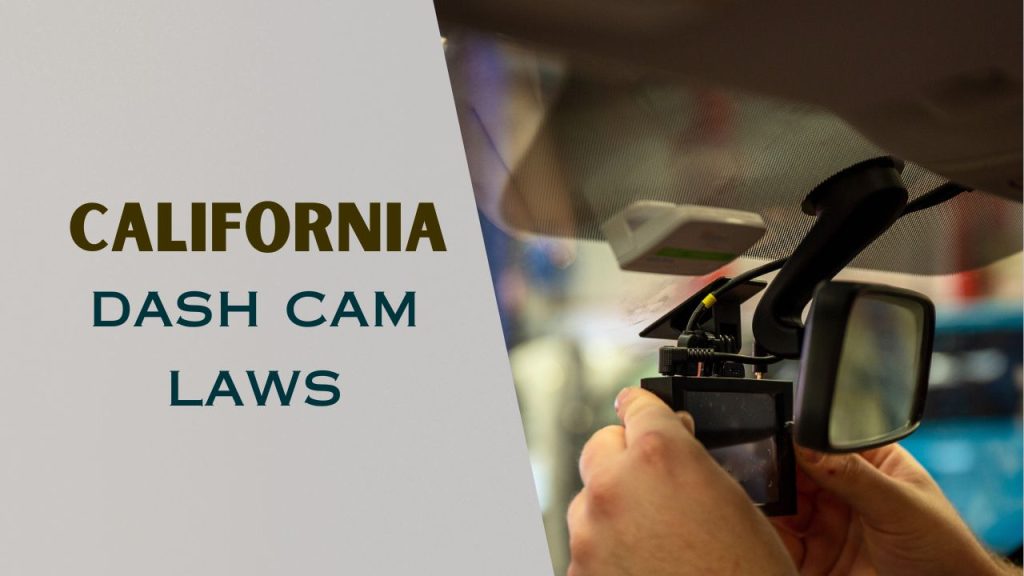
Wondering if that dash cam mounted on your windshield could actually get you a ticket? California dash cam laws cover far more than whether you can hit record. They touch on windshield placement, audio consent, and what happens if a camera is installed incorrectly.
Drivers in San Diego, Sacramento, and Fresno increasingly rely on dash cams for accident evidence. Understanding the rules keeps that evidence usable in court.
What California Law Says About Dash Cams
California does not ban dash cams outright. Vehicle Code Section 26708 restricts objects that obstruct a driver’s clear view through the windshield, and dash cam placement falls under that rule.
The camera itself is legal. Where and how it sits, and what it records, is where drivers run into trouble.
Who Can Legally Install and Use One
Any licensed driver may install a dash cam in a personal vehicle. There is no special permit requirement for private, non-commercial use.
Commercial drivers, including rideshare and delivery drivers, often face additional employer requirements, such as interior recording disclosures for passengers.
Renters and leased-vehicle drivers should check their agreement, since some leasing companies restrict permanent windshield mounts that leave marks.
Windshield Placement and Mounting Rules
California Vehicle Code Section 26708 allows a dash cam mounted in a 5-inch square in the lower corner farthest from the driver, or a 7-inch square in the lower center corner, as long as it does not block the driver’s view.
Placement in the direct line of sight, especially near the rearview mirror, can trigger a citation even if the camera itself is legal.
Mounting on the dashboard below the windshield line typically avoids these restrictions altogether, though it may reduce recording angle.
Fine amounts for obstructed-view violations vary by county and should be verified with a local traffic court or the California DMV before assuming a specific dollar figure.
Recording, Privacy, and Consent Laws
Video recording of the road and surrounding traffic from inside your own vehicle is generally legal, since there is no reasonable expectation of privacy on public roads.
Audio recording is more sensitive. California Penal Code Section 632 is widely understood as an all-party consent law, meaning everyone in a confidential conversation must agree before it is recorded. This applies most directly to conversations inside the vehicle, including with passengers.
The exact scope of Section 632, including how courts apply it to dash cam audio, should be confirmed with a licensed California attorney before relying on it.
Rideshare drivers recording passengers should post visible notice or verbally disclose recording to avoid consent disputes.
Penalties for Misuse or Improper Installation
Improper windshield mounting that obstructs the driver’s view can result in a traffic citation under Vehicle Code Section 26708.
Recording private conversations without consent under Penal Code Section 632 can expose a driver to civil liability and, in some cases, criminal penalties. Exact fine amounts should be verified through official California court resources, since they can vary.
Footage obtained in violation of privacy laws may also be excluded as evidence in civil or criminal proceedings.
Final Thoughts
Dash cams offer real protection for California drivers, from documenting accidents to deterring insurance fraud. Their legal value depends on correct placement and lawful recording practices.
Review current mounting and consent rules before installing one, since local enforcement and statute interpretation can shift.
This article is for informational purposes only and does not constitute legal advice. Consult a licensed attorney in California or refer to official state resources for guidance specific to your situation.