
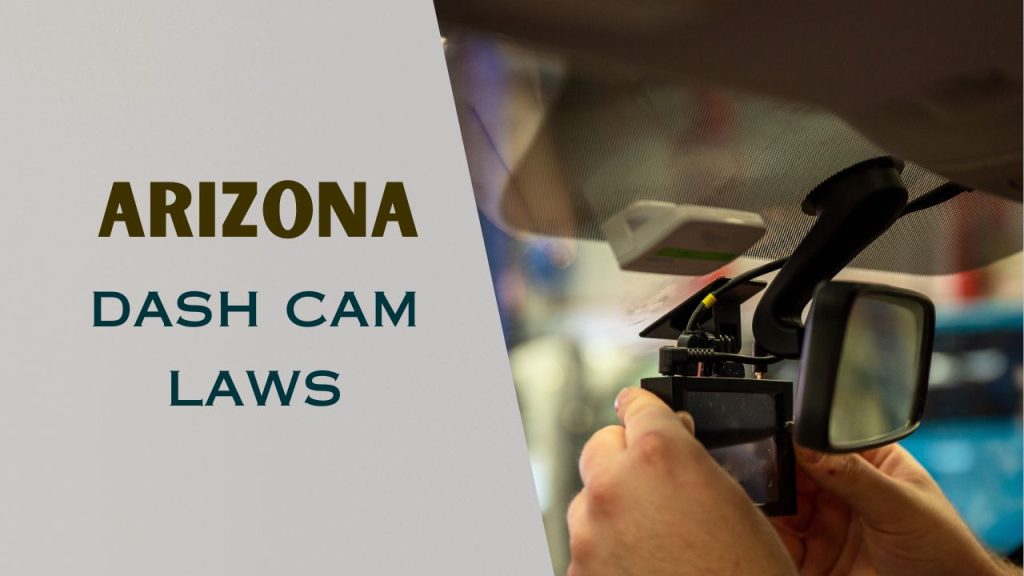
Is it legal to record other drivers on the road in Phoenix or Tucson? Arizona dash cam laws allow drivers to use dashboard cameras, but placement, recording, and privacy rules still apply.
Dash cams have become common on Arizona highways, from the I-10 corridor to local streets in Scottsdale and Flagstaff. Understanding the legal boundaries helps drivers avoid citations and use footage properly if a crash or dispute occurs.
Who Can Legally Install and Use a Dash Cam
Arizona does not require a permit to own or use a dash cam. Any driver in Mesa, Tempe, or Chandler can install one in a personal or commercial vehicle.
Rideshare and delivery drivers often use dash cams for liability protection. Employers may also install cameras in commercial fleets, though workplace privacy notices are generally recommended.
Passengers do not need separate consent to be recorded simply for riding in a vehicle equipped with a dash cam, since visual recording in public view carries lower privacy expectations than audio.
Windshield Placement and Mounting Rules
Arizona law restricts objects that obstruct a driver’s clear view through the windshield. Under Arizona Revised Statutes Section 28-959.01, items mounted on the windshield generally must not interfere with the driver’s line of sight.
Note: exact placement dimensions and enforcement thresholds should be verified against the current ARS 28-959.01 text, since obstruction statutes are sometimes updated.
Most drivers mount dash cams near the top center of the windshield, behind the rearview mirror, to minimize visual obstruction. Suction mounts and adhesive mounts are both commonly used, but placement lower on the windshield near the dashboard is often safer for compliance.
Recording and Privacy or Consent Laws
Arizona is a one-party consent state for audio recording. This means only one person involved in a conversation, including the dash cam operator, needs to consent to audio being recorded.
Video recording in public spaces, including roads and sidewalks visible from a vehicle, generally does not require consent, since there is no reasonable expectation of privacy in public view.
Recording inside private property, such as through a window into someone’s home, can raise separate privacy concerns and may not be protected the same way as public roadway footage.
Note: specific case law interpreting dash cam footage in Arizona privacy disputes should be confirmed through current legal research, as this area continues to evolve.
Penalties for Misuse or Improper Installation
Improper windshield mounting that obstructs a driver’s view can result in a traffic citation under obstruction-related statutes. Fine amounts vary and should be verified with local court resources, since exact figures are not standardized statewide.
Using dash cam footage to harass, stalk, or unlawfully surveil another person could expose the recorder to civil liability or criminal charges under Arizona’s harassment or surveillance statutes.
Footage obtained legally can generally be used as evidence in insurance claims or court proceedings, though authenticity and chain of custody may be challenged.
Final Thoughts
Arizona dash cam laws generally favor drivers who want added protection on the road, as long as mounting placement does not obstruct visibility and recordings respect basic privacy boundaries. Checking current statute language before installation helps avoid unnecessary citations.
This article is for informational purposes only and does not constitute legal advice. Laws can change, and individual circumstances vary. Consult a licensed Arizona attorney or official state resources for guidance specific to your situation.