
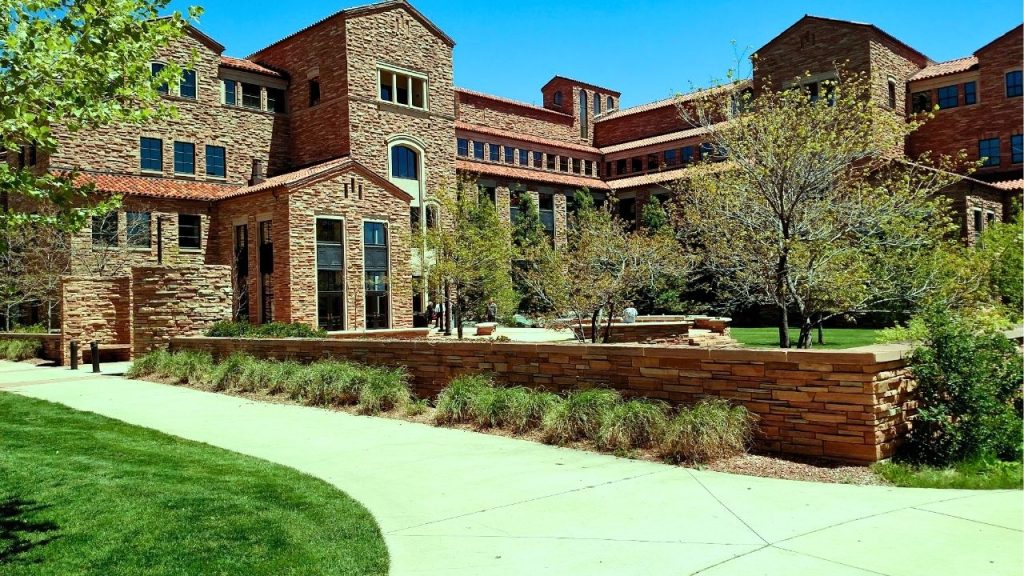
If you are researching the University of Colorado Law School acceptance rate before applying, you are already asking the right question. Admissions data tells you how competitive a program is and helps you set realistic expectations for your own application. This guide breaks down recent acceptance rates, LSAT and GPA benchmarks, and practical steps to strengthen your candidacy.
Overview of This Law School
The University of Colorado Law School, based in Boulder, is a public law school known for its strong environmental law, natural resources, and business law programs. It offers a mid-sized JD program with a collaborative culture and close ties to Colorado’s legal and business communities. Colorado Law is a solid regional and national option for students seeking academic rigor, in-state affordability, and access to a competitive legal market in the Mountain West.
Admitted Students’ Score Range
Median LSAT and GPA
Based on the most recently reported admissions cycle, admitted students at Colorado Law typically have a median LSAT score in the 159 to 161 range and a median undergraduate GPA around 3.60 to 3.70.
25th to 75th Percentile Range
Most admitted students fall between a 156 and 163 LSAT score, and a 3.40 to 3.85 GPA. Applicants at or above the median in both categories generally have a strong chance of admission, while those below both benchmarks may need a compelling personal statement or notable work experience to stand out.
These figures shift slightly each cycle based on applicant pool strength, so always check the school’s official ABA disclosures for the latest numbers.
Class Size and Acceptance Rate
Applicant Pool and Enrollment
Colorado Law typically receives around 1,700 to 2,000 applications per cycle and enrolls an incoming class of roughly 170 to 190 students.
Overall Acceptance Rate
The University of Colorado Law School acceptance rate has recently hovered around 40 to 50 percent, depending on the cycle. This places it in the moderately selective range compared to top 30 law schools, meaning strong numbers still matter, but a well-rounded application has a real shot.
How to Increase Your Chances of Acceptance
LSAT Prep Strategy
Start LSAT prep at least three to four months before your target test date. Focus on timed practice tests, review every missed question type, and aim to score at or above the school’s median of around 160. A score above the median meaningfully improves both your admission odds and your chances at scholarship funding.
Personal Statement Advice
Use your personal statement to explain why you want to study law and why Colorado Law specifically fits your goals, especially if you are drawn to environmental, natural resources, or business law. Be specific, avoid generic language, and show a clear turning point or piece of growth in your story rather than a general career overview.
Letters of Recommendation
Choose recommenders who know your academic or professional work closely, ideally a professor or supervisor who can speak to your analytical thinking and work ethic. Avoid letters from family friends or contacts without direct knowledge of your abilities.
Work Experience
Relevant work or internship experience, particularly in legal, policy, environmental, or business settings, can strengthen a borderline application. It signals maturity and genuine interest in the field beyond classroom performance.
Application Timing
Apply early in the cycle, ideally by November or December, since Colorado Law and most law schools use rolling admissions. Early applications are reviewed against a less filled class and generally have better odds than late-cycle submissions.
Final Thoughts
Colorado Law is a moderately selective public law school with a median LSAT near 160 and a median GPA near 3.65. The acceptance rate generally falls between 40 and 50 percent. Strong test scores, a focused personal statement, solid recommendations, relevant experience, and early applications all improve your chances of admission.
Admissions statistics vary from year to year and cycle to cycle. Readers should confirm current figures on the University of Colorado Law School’s official admissions page before applying.