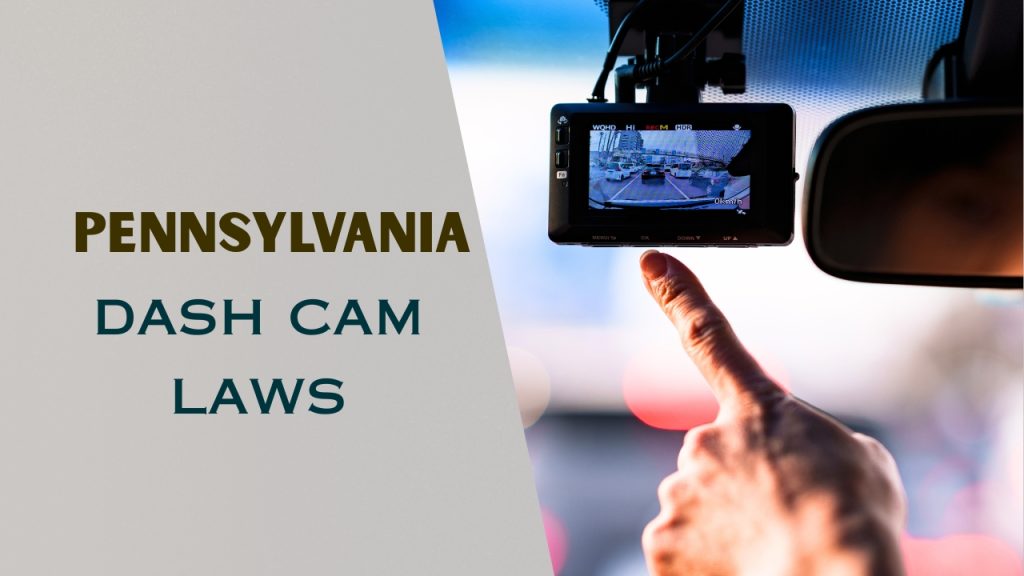
Drivers in Philadelphia, Pittsburgh, and Erie are installing dashboard cameras in growing numbers, which makes understanding Pennsylvania dash cam laws essential before mounting one. State rules touch on where a camera can sit on the windshield, who can operate it, and what audio recording is legally allowed.
Pennsylvania’s Approach to Dash Cams
Pennsylvania does not ban dash cams outright. The state regulates them through two bodies of law: the vehicle code, covering windshield obstructions, and the wiretapping statute, covering audio recording and consent.
A dash cam that is legal to mount may still record audio illegally if consent rules are ignored.
Who Can Legally Install and Use One
Any licensed driver in Pennsylvania may install and use a dash cam in a personal or commercial vehicle. There is no permit or registration requirement specific to dash cams.
Rideshare drivers in cities like Pittsburgh commonly use them for liability protection, though rideshare companies may have their own internal policies on top of state law.
Employers who require dash cams in commercial fleets must still follow the same consent rules that apply to individual drivers.
Windshield Placement and Mounting Rules
Pennsylvania law restricts materials and objects that obstruct a driver’s clear view through the windshield, under 75 Pa.C.S. § 4524. Dash cams are generally expected to be mounted low, near the rearview mirror, in a location that does not block the driver’s direct line of sight.
A camera mounted too low near the dashboard edge or too high across the sightline can draw a citation if an officer determines it obstructs visibility.
Flag for verification: the exact permissible mounting zone (such as a specific inch measurement from the top of the windshield) is not spelled out numerically in the statute and should be confirmed against current PennDOT guidance before publication.
Recording and Privacy or Consent Laws
Video recording in plain view, such as footage of the road while driving through Allentown or Harrisburg, is generally permissible since there is no reasonable expectation of privacy on public roads.
Audio recording is different. Pennsylvania is a two-party, or all-party, consent state under the Wiretapping and Electronic Surveillance Control Act, 18 Pa.C.S. § 5701 et seq. This means all parties to a conversation generally must consent before it can be legally recorded.
For dash cams, this becomes relevant if the camera captures conversations inside the vehicle, including with passengers or during traffic stops. Drivers who want to record in-cabin audio should get verbal acknowledgment from passengers beforehand.
Penalties for Misuse or Improper Installation
Violating the windshield obstruction statute is typically treated as a summary traffic offense, carrying a fine.
Violating the wiretapping law is more serious. Unauthorized interception of a conversation under 18 Pa.C.S. § 5703 can be charged as a felony offense, and civil liability may also apply.
Flag for verification: exact current fine amounts for windshield obstruction violations and the specific felony grading and penalty range under the wiretapping statute should be independently confirmed, since these figures are periodically updated.
Final Thoughts
Pennsylvania dash cam laws allow drivers broad freedom to record video for safety and evidence purposes, provided the camera does not obstruct the windshield and audio recording respects the state’s all-party consent requirement. Drivers in cities across the state can use dash cams confidently as long as mounting placement and in-cabin consent are handled correctly.
This article is for informational purposes only and does not constitute legal advice. Consult a licensed Pennsylvania attorney for guidance specific to your situation.