
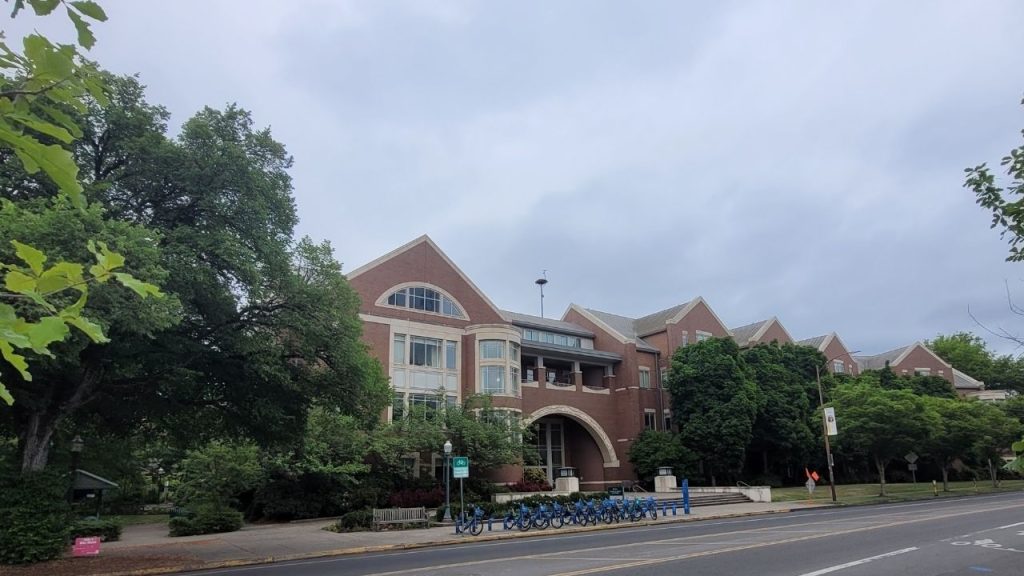
If you’re researching the Oregon law school acceptance rate before applying, you’re already ahead of most candidates. The University of Oregon School of Law, based in Eugene, is a respected public law program known for its environmental law specialty, tight-knit community, and reasonable admissions odds compared to many peer schools. This guide breaks down the numbers, the typical admitted student profile, and how to strengthen your application.
Overview of the Law School
The University of Oregon School of Law is a public institution offering a JD program alongside nationally ranked concentrations in environmental and natural resources law, conflict resolution, and business law. Class sizes are modest, which allows for more personalized attention, clinical opportunities, and faculty access than many larger programs offer.
Oregon Law is considered a moderately selective school. It attracts applicants with a wide range of LSAT scores and GPAs, making it a realistic target for both strong candidates and those with slightly below-median numbers who bring other strengths to their application.
Admitted Students’ Score Range
Average and Median LSAT Score
Based on the most recently reported entering class data, the median LSAT score for admitted students sits in the 157 to 159 range. The 25th percentile typically falls around 154, while the 75th percentile lands near 161. This spread shows that Oregon Law considers applicants across a fairly broad testing range rather than relying on a single cutoff.
Average and Median GPA
The median undergraduate GPA for the most recent incoming class is approximately 3.5 to 3.6. The 25th percentile GPA generally falls near 3.25, and the 75th percentile is closer to 3.75. As with LSAT scores, these figures shift slightly each cycle, so treat them as a benchmark rather than a fixed requirement.
Class Size and Acceptance Rate
Oregon Law typically receives around 1,700 to 2,000 applications per cycle. The school extends offers to a meaningful portion of that pool, with an overall acceptance rate generally estimated between 55% and 65%. The entering class size usually lands between 130 and 160 students, reflecting the school’s intentionally smaller, community-focused model.
Because acceptance rates depend on applicant volume and yield each year, these numbers should be treated as directional. Always check the school’s current ABA 509 disclosure for the exact figures from the latest cycle.
How to Increase Your Chances of Acceptance
LSAT Prep Strategy
Start with a diagnostic test to identify weak sections, then build a structured 8 to 12 week study plan focused on logical reasoning and reading comprehension, since these sections carry the most weight. Retake the test if your score is below the school’s median and you have room to improve with focused practice.
Personal Statement Advice
Write a specific, story-driven personal statement rather than a generic overview of your interest in law. Explain a clear reason for pursuing law at Oregon specifically, especially if you’re interested in environmental law, and avoid restating your resume.
Letters of Recommendation
Choose recommenders who know your work closely, such as professors or supervisors who can speak to your analytical thinking and writing skills. Academic letters generally carry more weight than professional ones for recent graduates.
Work Experience
Relevant experience in legal, nonprofit, policy, or research settings can strengthen a borderline application. It signals maturity and a tested interest in the field, which matters more the further removed you are from undergrad.
Application Timing
Apply early in the cycle, ideally between September and December. Rolling admissions means later applicants compete for fewer remaining seats, even with strong numbers.
Final Thoughts / Quick Summary
The Oregon law school acceptance rate reflects a program that balances selectivity with accessibility. A competitive applicant typically has an LSAT score in the high 150s, a GPA around 3.5 or higher, a focused personal statement, and application materials submitted early in the cycle.
Admissions statistics vary by year and application cycle. Readers should confirm current figures directly on the University of Oregon School of Law’s official admissions page before applying.