
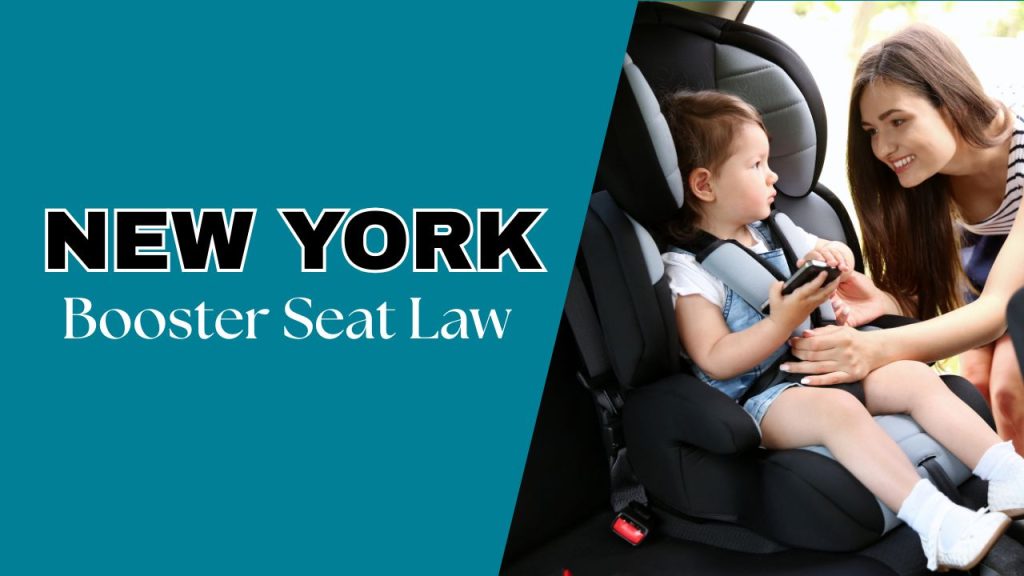
Every parent driving through Buffalo, Albany, or the streets of Manhattan should understand the New York law for booster seats before buckling up their child.
New York State takes child passenger safety seriously, and the rules are more detailed than a simple age cutoff.
Whether you are a new parent in Rochester or a grandparent picking up grandkids in Syracuse, knowing these requirements keeps your family safe and helps you avoid an unwanted ticket.
What New York Law Says About Booster Seats
New York’s child restraint requirements are governed by Vehicle and Traffic Law Section 1229-c. This statute lays out a staged approach to child passenger safety, moving kids through rear facing seats, forward facing harness seats, and finally booster seats as they grow.
Who Needs a Booster Seat in New York
Under current New York law, children generally move into a booster seat once they outgrow the weight or height limit of their forward facing harness seat, typically around age 4.
They must remain in an appropriate child restraint system, which includes a booster seat, until their 8th birthday.
Height and Weight Guidelines
While the statute itself focuses on age, safety officials and manufacturer guidance point to practical benchmarks:
Children usually qualify for a booster seat once they weigh around 40 pounds and have outgrown their harnessed seat.
Most boosters accommodate children up to 80 to 100 pounds, depending on the model.
The real test is height. A booster seat should be used until a child reaches about 4 feet 9 inches tall, since that is when a standard lap and shoulder belt typically fits correctly across the body.
Booster Seat Types Allowed Under New York Law
New York permits both high back and backless booster seats. A high back booster works better in vehicles with low seat backs since it supports the head and neck.
A backless booster is lighter and easier to move between cars, which many New York City families appreciate for carpools and rideshares.
Using the Seat Belt Correctly With a Booster
A booster seat must always be paired with both the lap and shoulder belt together. Never let a child use a booster with only a lap belt.
The lap portion should sit low across the thighs, and the shoulder belt should cross the middle of the chest, not the neck or face.
What Happens After Age 8
Once a child turns 8, New York law allows them to use a standard seat belt without a booster. However, many pediatric safety groups recommend keeping a child in a booster longer if the seat belt still does not fit properly, often until age 10 to 12.
Where Should the Booster Seat Go
New York recommends placing all children under 13 in the back seat. This position is safer because it keeps kids away from front airbags, which can cause serious injury to a smaller body during deployment.
Penalties for Non-Compliance
Failing to follow New York’s booster seat requirements can result in fines ranging from roughly 25 to 100 dollars per violation, along with driver violation points in some cases. Beyond the financial cost, improper restraint significantly raises the risk of injury during a crash.
Final Thoughts for New York Families
Understanding the New York law for booster seats is about more than avoiding a citation. It is about giving your child the best possible protection on every trip, from a quick drive through Long Island to a long haul upstate.
Check your seat’s manufacturer guidelines, confirm your child’s height and weight, and always buckle correctly with the lap and shoulder belt together.