
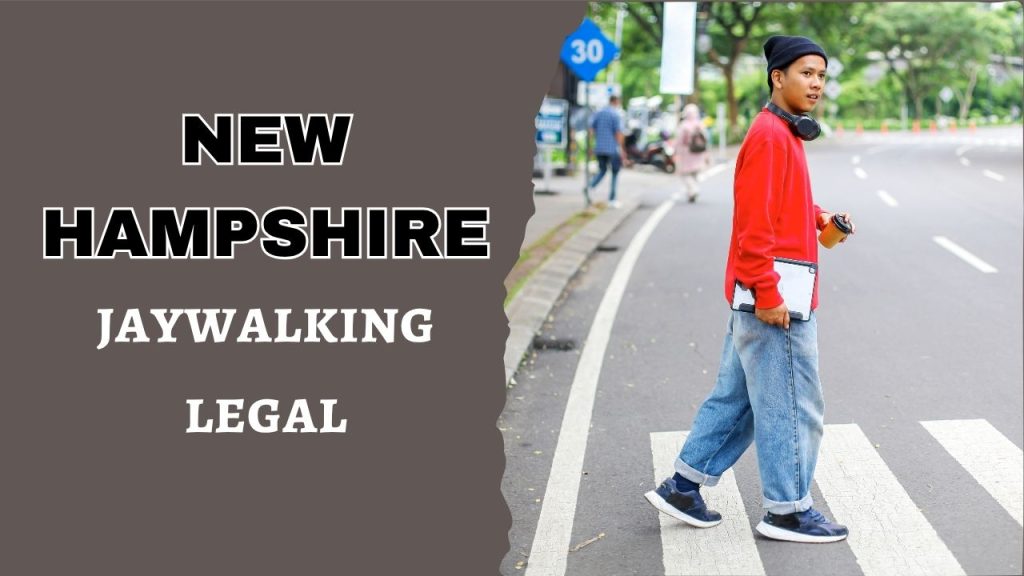
If you have ever crossed a quiet street in Concord or Manchester without using a crosswalk, you may have wondered, is jaywalking legal in New Hampshire? The short answer is that New Hampshire does not have a dedicated statewide jaywalking law like many other states do, but that does not mean pedestrians can cross anywhere without consequence.
What New Hampshire Law Actually Says About Jaywalking
New Hampshire’s traffic code, found in RSA Title XXI, does not use the term “jaywalking” and does not criminalize crossing a street outside a marked crosswalk in the same blanket way as states like California or New York.
Instead, the state relies on general pedestrian right of way rules under RSA 265:35, which govern how pedestrians and drivers must behave near crosswalks.
Crosswalk Rules Every New Hampshire Pedestrian Should Know
Marked vs Unmarked Crosswalks
New Hampshire law recognizes both marked and unmarked crosswalks. An unmarked crosswalk is simply the extension of a sidewalk across an intersection, even without painted lines. Drivers must yield to pedestrians within either type of crosswalk.
Right of Way Between Intersections
When a pedestrian crosses at a point other than a marked or unmarked crosswalk, drivers on the roadway generally have the right of way. A pedestrian crossing mid-block must yield to approaching traffic, even though doing so is not treated as a specific criminal offense.
Are There Fines for Jaywalking in New Hampshire
Because there is no standalone jaywalking statute, there is no fixed statewide fine labeled “jaywalking” in New Hampshire. Pedestrians who fail to yield properly under RSA 265:35, or who create a hazardous situation on the roadway, can still receive a citation for a traffic violation, with the amount set by the local district court. Some cities and towns, including parts of Manchester and Nashua, also maintain local pedestrian safety ordinances that carry their own penalties.
What Happens If You Are Hit While Jaywalking
New Hampshire follows a modified comparative negligence rule under RSA 507:7-d. If a pedestrian crossing outside a crosswalk is struck by a vehicle, fault may be shared between the driver and the pedestrian. If the pedestrian is found more than 50 percent responsible, they may be barred from recovering damages. This makes crosswalk use important even where it is not strictly required by criminal law.
Local Ordinances Vary Across New Hampshire Towns
Because jaywalking enforcement in New Hampshire is largely local rather than statewide, rules can differ between municipalities. Residents of Portsmouth, Concord, Nashua, and Manchester should check their town or city code, since some downtown districts enforce stricter pedestrian crossing rules near schools and commercial areas.
Safety Tips for New Hampshire Pedestrians
Use marked crosswalks whenever available, make eye contact with drivers before crossing, and avoid crossing between parked cars where visibility is limited. These habits protect both your safety and your legal standing if an accident occurs.
Final Thoughts
So, is jaywalking legal in New Hampshire in 2026? Technically, there is no specific jaywalking law on the books, but pedestrians still carry legal responsibility for crossing safely. Understanding crosswalk rules and local ordinances helps New Hampshire residents avoid citations and stay protected under the state’s comparative negligence laws.
This article is for general informational purposes and does not constitute legal advice. For questions about a specific situation, consult a licensed New Hampshire attorney or your local municipal code.