
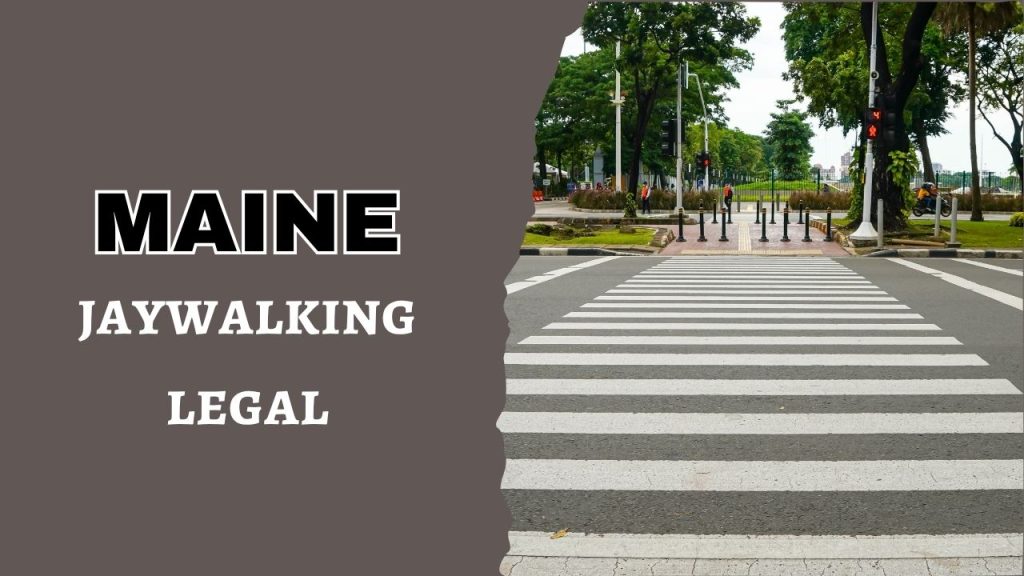
Many pedestrians ask, is jaywalking legal in Maine, especially when crossing quiet rural roads or busy downtown streets in Portland or Bangor. The short answer is no, jaywalking is not broadly legal in Maine, but the state’s rules are more nuanced than a flat ban. Maine law focuses on where and how pedestrians cross rather than punishing every mid-block crossing outright.
What Does Maine Law Actually Say About Jaywalking
Maine does not use the word “jaywalking” in its statutes. Instead, pedestrian conduct is governed under Title 29-A of the Maine Revised Statutes, which addresses traffic laws and pedestrian right-of-way.
These rules require pedestrians to use crosswalks when reasonably available and to yield to vehicles when crossing outside a marked or unmarked crosswalk.
Crosswalk Rules in Maine
At intersections with marked crosswalks, pedestrians have the right of way, but drivers are only required to yield once a pedestrian has entered the crosswalk or is close enough to pose a danger.
Unmarked crosswalks, which are the imaginary extensions of sidewalks across an intersection, are also legally recognized in Maine. Crossing there is generally permitted, though caution is expected from both drivers and walkers.
Crossing Outside a Crosswalk
If a pedestrian crosses between intersections where no crosswalk exists, Maine law requires them to yield to all approaching vehicles. This does not make the act automatically illegal, but it does shift the responsibility for safety onto the pedestrian. If a collision occurs, this factor can affect liability determinations.
Are There Fines for Jaywalking in Maine
Maine does not issue frequent citations for pedestrians crossing outside a crosswalk unless it creates a clear safety hazard or obstructs traffic.
Local municipalities, including Portland, Lewiston, and Bangor, can enforce pedestrian safety ordinances, and fines when issued typically range from small monetary penalties to slightly higher amounts in areas with heavy foot and vehicle traffic.
Repeat violations or crossing in a manner that endangers others can lead to increased scrutiny from law enforcement.
Why Crosswalk Safety Matters for Maine Residents
Maine’s mix of small town roads, tourist-heavy coastal areas, and busier city centers means pedestrian safety varies widely by location.
In towns like Bar Harbor or Camden, seasonal tourist crowds increase pedestrian traffic near unmarked crossings. In cities like Portland, marked crosswalks near schools and downtown corridors are more strictly monitored.
Pedestrian Right of Way in Practice
Even where crossing is technically allowed, drivers are not always required to stop instantly. Right of way is a shared responsibility. Maine courts generally look at whether both the driver and the pedestrian acted reasonably given the visibility, speed, and location involved.
Practical Tips for Pedestrians in Maine
Use marked crosswalks whenever they are available, especially in high traffic areas. When crossing outside a crosswalk, wait for a clear gap in traffic and make eye contact with drivers when possible. At night or in low visibility conditions, wearing reflective clothing can reduce risk significantly, since Maine has many unlit rural roads.
Final Thoughts
So, is jaywalking legal in Maine in 2026? Technically, there is no strict jaywalking ban, but pedestrians crossing outside crosswalks must yield to traffic and can be held responsible if an incident occurs.
Understanding Maine’s crosswalk and right of way rules helps residents and visitors stay safe and avoid unnecessary citations.
This article is for general informational purposes and does not constitute legal advice. For specific situations, consult a licensed Maine attorney.