
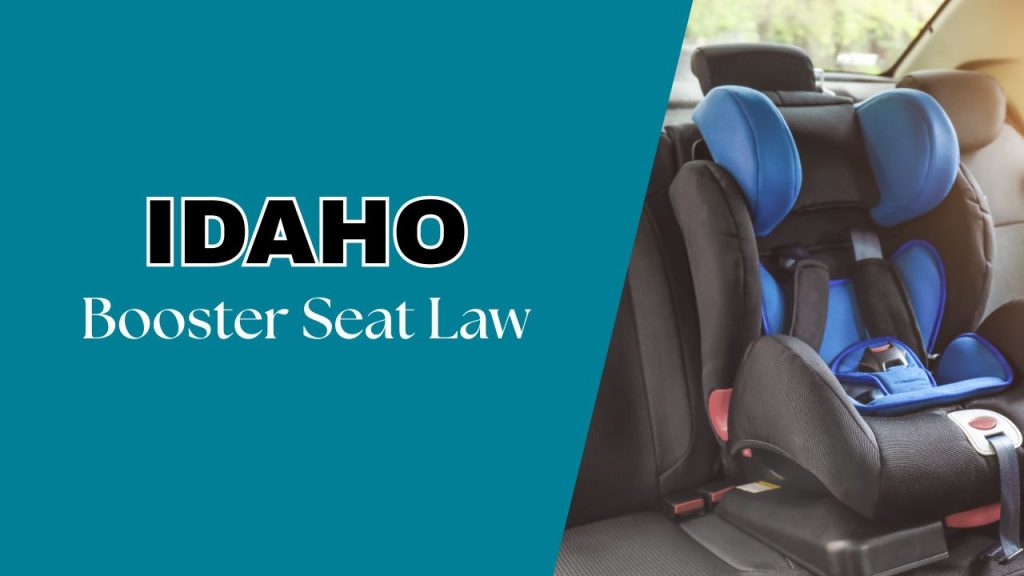
If you are raising kids in the Gem State, understanding the Idaho law for booster seats is one of the simplest ways to keep your family safe and avoid a ticket. Idaho Code Section 49-672 sets the legal baseline, but the ITD recommends going further. Here is what every Idaho parent and caregiver should know in 2026.
What Idaho Law Actually Requires
The Age Cutoff
Under Idaho Code 49-672, any child 6 years old or younger must ride in a proper child safety restraint in a noncommercial vehicle built with seat belts after 1966. Once a child turns 7, the state no longer legally requires a car seat or booster, though safety experts advise otherwise.
What Counts as a Safety Restraint
The restraint used must meet Federal Motor Vehicle Safety Standard 213. Depending on your child’s age and size, this could be a rear-facing seat, a forward-facing harnessed seat, or a booster seat paired with a lap-and-shoulder belt.
Why Idaho Recommends Boosters Beyond Age 6
ITD Age and Height Guidance
While the statute stops at age 6, the ITD recommends keeping kids in a booster until they are at least 8 years old or reach 4 feet 9 inches tall. This is the gap where children have outgrown a harnessed seat but are still too small for an adult seat belt to fit safely.
The Seat Belt Fit Test
Before skipping the booster, check whether your child passes the fit test: back flat against the seat, knees bending naturally over the edge, lap belt low on the thighs, and shoulder belt crossing the chest, not the neck. If any part fails, your child still needs a booster.
Penalties for Skipping a Booster
Failing to restrain a child under 7 is an infraction in Idaho, with fines near $84. The driver, not the parent, is usually responsible if someone else is transporting the child.
Exceptions Under Idaho Code 49-672
The law allows two narrow exceptions. If every seat belt in the vehicle is already occupied, an unrestrained child covered by this section must sit in the back seat if one is available. A child may also be temporarily removed from a restraint for nursing or urgent care during the trip.
Booster Seat Placement Rules
A booster seat should always pair with a lap-and-shoulder belt, never a lap belt alone. The ITD recommends the back seat for all children through age 13. If a vehicle has no rear seat, a booster may go in front only if the passenger airbag is deactivated or the seat is moved back.
Booster Seats in Rideshares and Rentals
Idaho’s restraint law applies broadly to noncommercial vehicles, and this includes rideshare trips. Uber and Lyft both expect riders to bring and install their own car seat or booster for young children, since drivers are not required to supply one.
The Bottom Line for Idaho Families
Idaho’s legal minimum ends at age 6, but real protection does not. Following ITD guidance and using a booster until your child passes the seat belt fit test is the safest approach for families across Boise, Idaho Falls, Coeur d’Alene, and every town in between.