
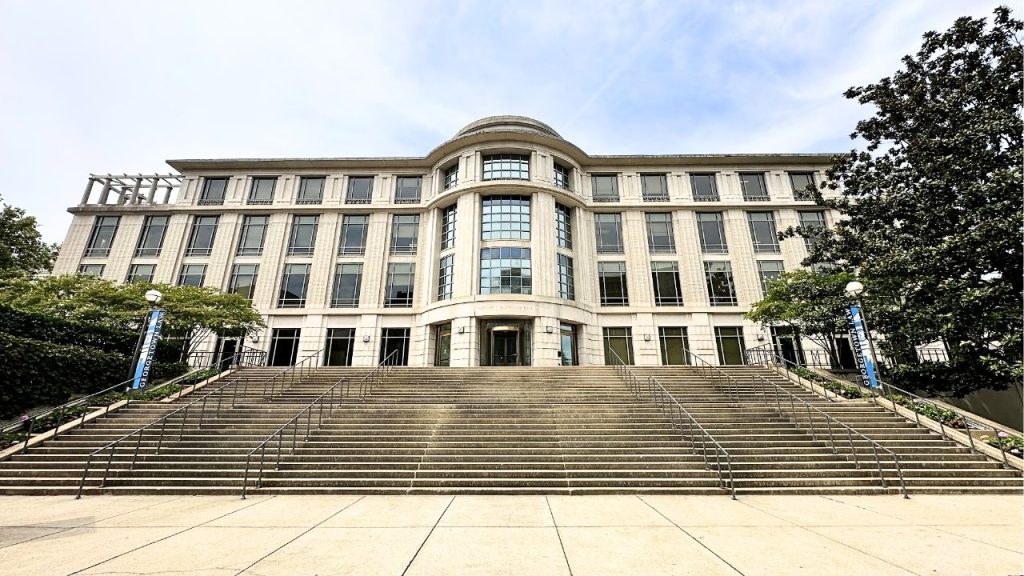
If you are researching the Georgetown part time law school acceptance rate, you already know this program is one of the most respected evening JD tracks in the country. Georgetown University Law Center’s Evening Division lets working professionals earn a JD while keeping a job, but admission is competitive and the numbers matter. Here is what prospective applicants need to know about requirements, scores, and how to stand out.
Overview of This Law School
Georgetown University Law Center is located in Washington, D.C., and is consistently ranked among the top law schools in the United States. Its Evening Division is one of the largest and longest-running part-time JD programs at a top-14 school, designed for applicants who want to study law while working full-time. Classes typically meet in the evenings, and part-time students can transition to the full-time division after their first year if their schedule allows.
Admitted Students’ Score Range
Score ranges shift slightly each cycle, so treat the figures below as a general guide based on the most recently available admissions data rather than an exact current-year number.
LSAT Scores
Admitted Evening Division students generally fall in the mid-to-upper 160s on the LSAT, with the median typically a few points below the full-time day division median, which has recently sat in the low 170s.
GPA Scores
Median undergraduate GPA for part-time admits usually falls in the 3.6 to 3.8 range, again slightly below the day division median, which has recently been near 3.85 to 3.9.
Class Size and Acceptance Rate
Georgetown Law receives a large applicant pool each cycle, often more than 10,000 applications across both divisions. The Evening Division itself is smaller and more selective in seat count, typically enrolling around 100 to 130 students per incoming class.
Georgetown Law’s overall acceptance rate across both divisions has recently trended in the 20 to 25 percent range. The part-time acceptance rate specifically tends to run tighter than that because of the limited number of evening seats compared to demand, so applicants should expect a genuinely competitive process rather than an easier backdoor into the school.
How to Increase Your Chances of Acceptance
Build a Strong LSAT Prep Strategy
Start prep at least three to four months before your target test date. Use timed practice tests weekly, focus on your weakest section first, and aim to score at or above the published median for a real shot at admission.
Write a Focused Personal Statement
Explain clearly why you are pursuing a part-time JD specifically. Admissions committees want to see a realistic plan for balancing work, life, and law school, not just general interest in law.
Secure Strong Letters of Recommendation
Choose recommenders who know your work ethic well, ideally a supervisor and a professor. Specific, detailed letters carry more weight than generic praise.
Highlight Relevant Work Experience
Because this is a working professionals’ program, meaningful full-time work experience is a real asset. Emphasize leadership, complex problem-solving, or client-facing responsibility.
Apply Early in the Cycle
Georgetown Law uses rolling admissions. Submitting your application in September or October, rather than closer to the deadline, generally improves your odds since seats fill throughout the cycle.
Final Thoughts
Georgetown’s part-time Evening Division offers a genuine path to a top-14 JD for working professionals, but the acceptance rate reflects real competition, not an easier alternative. Strong LSAT scores, a solid GPA, a clear personal statement, and early application timing all meaningfully improve your chances.
Disclaimer: Admissions statistics, including acceptance rates, LSAT scores, and GPA figures, change from year to year. Always confirm the most current numbers directly on Georgetown Law’s official admissions page before applying.