
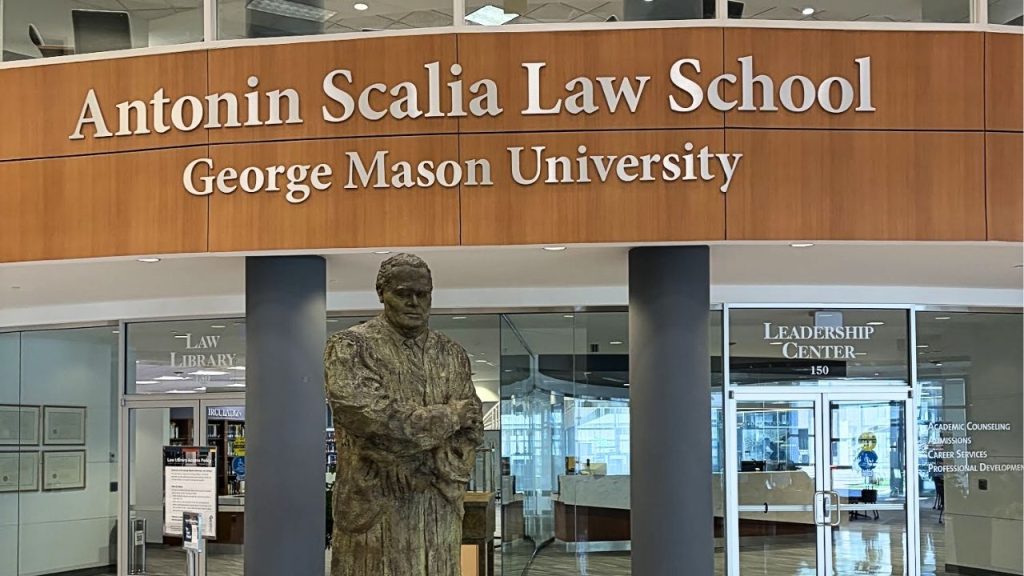
If you’re comparing law schools this cycle, the George Mason law school acceptance rate is probably one of the first numbers you’re trying to pin down. Antonin Scalia Law School, George Mason University’s law program, has built a reputation as a selective yet reasonably attainable option for applicants with strong numbers, especially those interested in law and economics or originalist legal scholarship. Here’s what the data shows and how to position yourself as a competitive applicant.
Overview of Antonin Scalia Law School
Located in Arlington, Virginia, minutes from Washington, D.C., Scalia Law is George Mason University’s law school. It’s known for a faculty deep in law and economics, a strong moot court program, and close proximity to federal agencies, courts, and think tanks that fuel internship and clerkship opportunities. The school consistently ranks in the top tier of ABA-accredited programs and offers one of the better value propositions among nationally recognized law schools, particularly for Virginia residents.
Admitted Students’ Score Range
LSAT Scores
Based on the most recently available admissions cycle data, admitted students at Scalia Law typically post a median LSAT in the low-to-mid 160s, with the 25th to 75th percentile range spanning roughly the upper 150s to upper 160s. Applicants scoring 165 or above are generally viewed as highly competitive.
GPA Scores
The median undergraduate GPA for the most recent entering class has hovered around 3.7 to 3.8, with the middle 50 percent range typically falling between the mid 3.5s and upper 3.8s. A GPA above 3.8 paired with a solid LSAT score meaningfully strengthens an application.
Note: exact figures shift slightly each cycle, so treat these as directional benchmarks rather than fixed cutoffs.
Class Size and Acceptance Rate
Scalia Law typically receives several thousand applications per cycle, admits roughly one-third of applicants, and enrolls an entering class of approximately 180 to 220 students. This puts the overall acceptance rate in the general range of 30 to 35 percent for recent cycles, making it moderately selective compared to peer regional and national law schools.
Because applicant pools and target class sizes shift year to year, the acceptance rate can move up or down by several percentage points from one cycle to the next.
How to Increase Your Chances of Acceptance
LSAT Prep Strategy
Start with a diagnostic test to identify weak sections, then build a structured 3 to 4 month study plan. Prioritize logical reasoning and reading comprehension, since these sections make up the bulk of the exam. Take full timed practice tests weekly in the final month to build stamina and pacing.
Personal Statement Advice
Write a focused, specific story rather than a general “why I want to be a lawyer” essay. Admissions committees respond to concrete experiences that show judgment, resilience, or analytical thinking. Keep it under two pages, and have at least one attorney or professor review it before submission.
Letters of Recommendation
Choose recommenders who know your work closely, ideally a professor who can speak to your analytical writing or a supervisor who can speak to your work ethic. Give them at least a month’s notice and a resume to work from.
Work Experience
Meaningful work or internship experience, especially in legal, policy, or research settings, can offset a slightly lower GPA or LSAT. It also signals maturity and a realistic understanding of legal careers.
Application Timing
Apply early in the cycle, ideally by November or December, since many law schools including Scalia Law use rolling admissions. Early applications are reviewed against a less depleted seat count, which can meaningfully improve your odds.
Final Thoughts / Quick Summary
Scalia Law rewards applicants with a competitive LSAT in the low-to-mid 160s, a GPA near 3.7 or higher, and a well-timed, well-crafted application. With an acceptance rate typically in the 30 to 35 percent range, it’s selective but achievable for applicants who prepare deliberately across every part of the application.
Disclaimer: Admissions statistics, including acceptance rates, LSAT medians, and GPA figures, vary from year to year and cycle to cycle. The figures in this article reflect the most recently available data at the time of writing. For current, official numbers, please confirm directly on George Mason University’s Antonin Scalia Law School admissions page.