
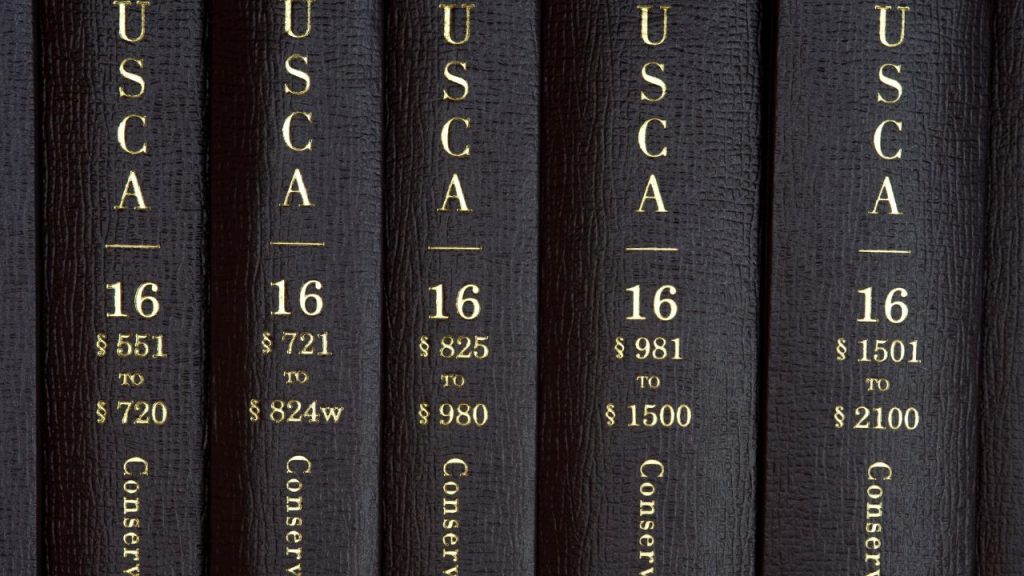
A federal law book sitting on your shelf could be the most important thing you own, and most Americans have never once picked one up. Here is a number that puts things in perspective: the Code of Federal Regulations, which is the official collection of rules issued by U.S. federal agencies, now contains over 188,000 pages. That is a 165 percent increase since 1975. These are real rules that affect your job, your health, your taxes, and your rights every single day.
And yet most people have no idea what is in them.
I am not saying you need to read all 188,000 pages. But I do think every American should understand what a federal law book is, which ones matter, and how to actually use them. Let me walk you through it.
What Is a Federal Law Book?
A federal law book is any published compilation of laws, statutes, or regulations enacted at the federal level in the United States. The two most important ones are the United States Code and the Code of Federal Regulations.
The United States Code is the official record of all general and permanent federal laws passed by Congress and signed into law. It is organized into 54 titles covering everything from Title 7 (Agriculture) to Title 26 (Internal Revenue Code) to Title 50 (War and National Defense). If Congress passed it, it lives there.
The Code of Federal Regulations, or CFR, is where federal agency rules go. Think of it this way: Congress writes the broad law, and agencies like the IRS, FDA, or EPA write the detailed rules about how that law works in practice. The CFR is divided into 50 titles representing broad areas of federal regulation.
Why You Actually Need a Federal Law Book in 2026
Here is the truth. You are already subject to thousands of federal regulations, whether you know about them or not. Ignorance of the law is not a legal defense.
A good federal law book for beginners helps you understand your rights before a situation forces you to. It answers questions like: What does the government owe you? What can and cannot they do? What protections do you have as a worker, a consumer, or a citizen?
This is also why understanding the philosophical foundation of law matters. If you want to understand why certain laws exist and what gives them moral weight, reading up on books on natural law gives you that deeper context. Law is not just rules. It is built on principles.
The Best Federal Law Books to Read in 2026

1. The United States Code (Official Edition)
This is the cornerstone of any United States Code reference book collection. The Office of the Law Revision Counsel of the U.S. House of Representatives prepares it, and it is freely available online at uscode.house.gov. For a physical copy, commercially published annotated editions like the U.S.C.A. (United States Code Annotated) include editorial notes, court decisions, and regulatory interpretations that make it far more useful.
2. The Code of Federal Regulations (CFR)
If you work in a regulated industry, healthcare, finance, food production, or transportation, you need a Code of Federal Regulations book. The CFR is updated quarterly and is publicly available through the Government Publishing Office at govinfo.gov. It covers 50 subject areas and is the go-to resource for understanding federal regulations.
3. Federal Administrative Law by Gary S. Lawson
This is one of the most respected federal administrative law books in academic and professional circles. It covers agency rulemaking, judicial review, constitutional limits on agency power, and the federal legislation and statutes that shape how agencies operate. If you are a law student or a compliance professional, this one belongs on your desk.
4. Federal Laws and Regulations Guide (USA.gov)
For a free, accessible starting point, the official USA.gov guide to federal laws and regulations is one of the most practical resources available. You can search by subject, keyword, or bill name. It also explains the entire lawmaking process from bill to law in plain language. This is the best introduction to federal law resources for everyday Americans.
Who Needs a Federal Law Book?
You do, honestly. But especially:
- Small business owners navigating federal regulations and compliance requirements
- Students studying federal constitutional law or public policy
- Professionals in regulated industries like healthcare, banking, and transportation
- Anyone who wants to understand their rights before they need a lawyer
Frequently Asked Questions
What is a federal law book?
A federal law book is a published compilation of U.S. federal statutes, codes, or agency regulations. The two primary ones are the United States Code, which contains laws passed by Congress, and the Code of Federal Regulations, which contains rules issued by federal agencies.
What is the difference between the U.S. Code and the Code of Federal Regulations?
The United States Code contains laws enacted by Congress. The Code of Federal Regulations contains the detailed rules written by federal agencies to implement those laws. Think of the U.S. Code as the “what” and the CFR as the “how.”
How many pages is the Code of Federal Regulations?
As of year-end 2021, the Code of Federal Regulations contained over 188,346 pages, spread across 243 bound volumes. That is a 165 percent increase since 1975.
Where can I get a federal law book for free?
You can access the full United States Code for free at uscode.house.gov and the Code of Federal Regulations at govinfo.gov. Both are official government sources and are updated regularly.
Is the federal law book the same as the Constitution?
No. The U.S. Constitution is a separate foundational document. A federal law book like the U.S. Code contains statutes passed under the authority of the Constitution, not the Constitution itself. The Constitution establishes the framework. The U.S. Code fills in the details.