
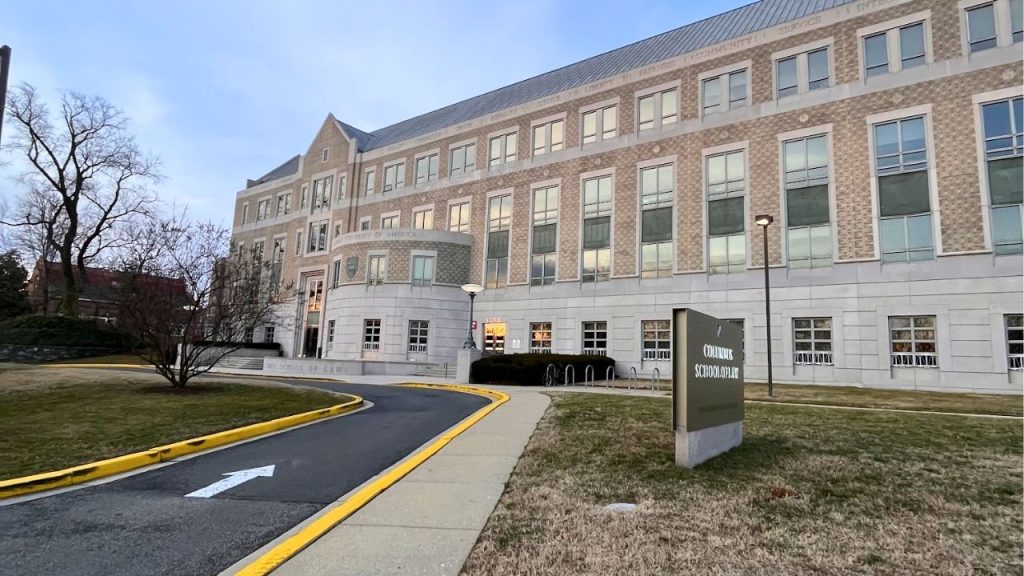
If you’re researching the Chapman law school acceptance rate before applying, you’re likely trying to gauge how competitive admission really is. Chapman University’s Dale E. Fowler School of Law is a respected, ABA-accredited program in Orange, California, known for strong bar passage support and a collaborative learning environment. This guide breaks down recent acceptance rate data, LSAT and GPA benchmarks, and practical strategies to strengthen your application.
Overview of Chapman Law School
Chapman’s Fowler School of Law is part of Chapman University, a private institution in Orange County, California. The school offers a full-time JD program, part-time options, clinical experiences, and specialized certificates in areas like entertainment law and tax law. It has built a reputation for personalized attention, small class sizes, and strong regional employment outcomes across the Southern California legal market.
Admitted Students’ Score Range
LSAT Scores
Recent entering classes at Chapman Law have shown a median LSAT score around 156, with the 25th to 75th percentile range typically falling between roughly 152 and 159. This places Chapman in the moderately selective tier among ABA-accredited law schools.
GPA Scores
The median undergraduate GPA for recently admitted students is approximately 3.50, with the 25th to 75th percentile range generally spanning 3.19 to 3.75. Applicants at or above this median tend to have stronger admission odds, though a strong LSAT score can help offset a lower GPA.
Class Size and Acceptance Rate
In recent admissions cycles, Chapman Law has received approximately 1,400 to 1,600 applications per year. Of these, roughly 650 to 750 applicants are offered admission, and the entering class typically enrolls between 150 and 180 students. This places the overall acceptance rate in the range of 45% to 55%, depending on the specific cycle.
Exact figures shift each year based on applicant pool strength and class size targets, so always confirm current numbers through Chapman’s official admissions disclosures.
How to Increase Your Chances of Acceptance
LSAT Prep Strategy
Start preparing at least three to four months before your test date. Use official LSAC practice tests to build timing and accuracy, and spend extra time on your weakest section rather than only repeating your strengths.
Personal Statement Advice
Write a focused, specific statement explaining why you want to practice law and why Chapman fits your goals. Avoid generic language about “helping people.” Anchor your essay in a concrete story or experience that shows judgment and motivation.
Letters of Recommendation
Choose recommenders who know your academic or professional work closely, such as a professor or direct supervisor, rather than someone with a prestigious title but limited firsthand knowledge of you.
Work Experience
Relevant internships, legal work, or public service experience can strengthen a borderline application, especially when paired with a compelling personal statement that ties the experience to your goals.
Application Timing
Apply early in the cycle, ideally by November or December, since many law schools use rolling admissions. Early applicants often benefit from more available seats and stronger scholarship consideration.
Final Thoughts / Quick Summary
Chapman Law’s acceptance rate sits in a moderately competitive range, with a median LSAT near 156 and median GPA near 3.50. Strong test scores, a compelling personal statement, solid letters of recommendation, and an early application all meaningfully improve your odds of admission.
Disclaimer: Admissions statistics, including acceptance rates, LSAT scores, and GPA figures, vary from year to year. Readers should confirm current figures directly on Chapman University’s official admissions page before making application decisions.