
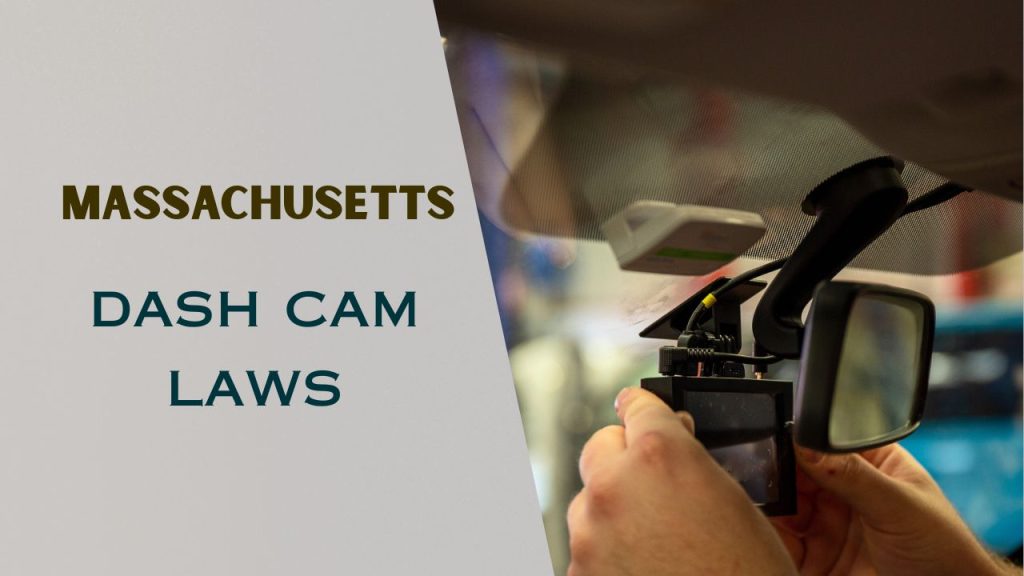
Drivers in Boston, Worcester, and Springfield are increasingly installing dash cameras to document accidents on the road. Understanding Massachusetts dash cam laws matters before you mount one, because the state’s strict wiretapping statute sets it apart.
What Massachusetts Law Says About Dash Cams
Massachusetts has no statute written specifically for dash cameras. Instead, dash cam use falls under two frameworks: windshield obstruction rules under the motor vehicle code, and the state’s wiretapping law, which governs audio recording.
Video-only recording of public activity, like traffic or a collision, is generally permitted. Audio recording is where Massachusetts law gets stricter than most states.
Who Can Legally Install and Use a Dash Cam
Any driver or vehicle owner in Massachusetts can legally install and use a dash camera. No license, permit, or registration is required.
This applies to personal vehicles, as well as rideshare and delivery drivers in cities like Worcester and Lowell. Fleet operators and commercial trucking companies also use dash cams for liability documentation.
The person controlling the device is responsible for how it is used, including where it is mounted and whether it captures audio.
Windshield Placement and Mounting Rules
Massachusetts General Laws Chapter 90, Section 9D restricts objects that obstruct a driver’s clear view through the windshield. Dash cams must be mounted so they do not block the driver’s line of sight.
Recommended Mounting Area
Drivers in Springfield and Cambridge typically mount the camera behind the rearview mirror, in a small area near the top center of the windshield, keeping it out of the direct sightline.
Avoid Obstructing Safety Equipment
Do not place the device over airbag deployment zones or where it blocks the rearview mirror.
The exact permissible obstruction area, measured in inches from the windshield edge, has not been independently verified against the current statute and should be confirmed before publication.
Recording, Privacy, and Consent Laws
This is where Massachusetts stands apart. The wiretapping statute, Massachusetts General Laws Chapter 272, Section 99, is an all-party consent law. It generally makes it illegal to secretly record oral communications without everyone’s consent.
Video recording alone, in places with no reasonable expectation of privacy, such as a public roadway, typically does not violate this statute. Audio recording of a passenger or another driver during a traffic stop raises consent concerns.
Drivers in Boston who want audio should post a visible notice in the vehicle or disable audio recording to reduce legal risk.
Footage can generally be used in insurance claims, police reports, and civil court proceedings, though courts have discretion over whether secretly recorded audio is admissible.
Penalties for Misuse or Improper Installation
Improperly mounting a dash cam so it obstructs the driver’s view can result in a traffic citation under the windshield obstruction statute, similar to violations involving air fresheners or window decals.
Violating the wiretapping statute is more serious. Illegal interception under Chapter 272, Section 99 can be charged as a felony, carrying fines and possible jail time. Exact fine ranges and maximum penalties should be independently verified against the current statute before publication.
Final Thoughts
Massachusetts dash cam laws allow any driver to record video with minimal restriction, but the strict all-party consent rule for audio sets the state apart from most of the country. Mount your camera carefully, and think twice before enabling audio capture without everyone’s knowledge.
This article is for informational purposes only and does not constitute legal advice. Consult a licensed Massachusetts attorney for guidance specific to your situation.