
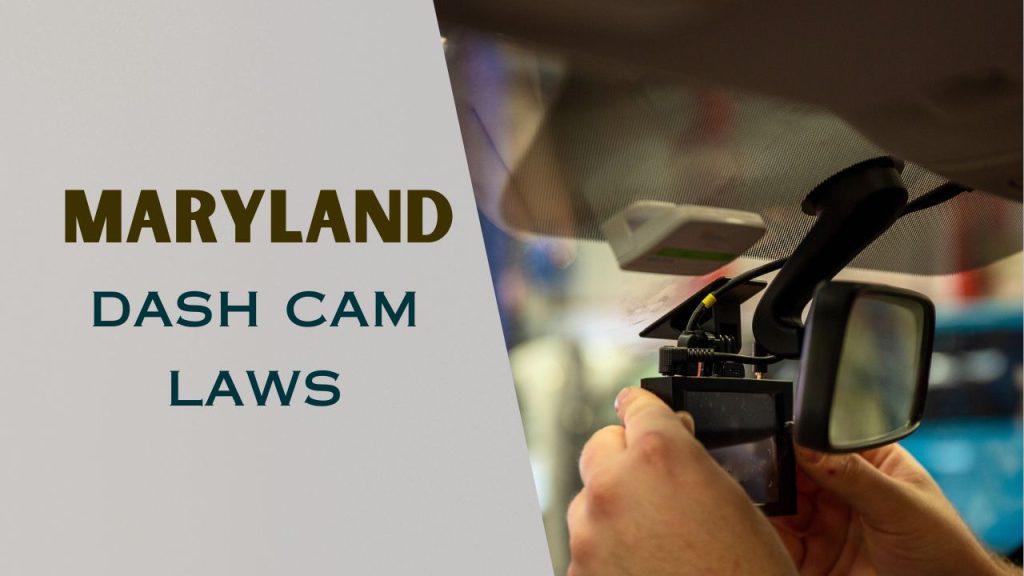
Drivers across the state increasingly rely on dashboard cameras for accident documentation and personal safety, but Maryland dash cam laws include specific rules on placement, recording, and consent that every driver should understand before hitting the road in cities like Baltimore, Annapolis, or Frederick. Knowing these rules helps avoid fines and keeps any footage usable as evidence.
Maryland’s Approach to Dash Cams
Maryland does not have a law that bans dash cams outright. Instead, dash cam use is shaped by windshield obstruction rules, wiretapping statutes, and general traffic safety regulations. Drivers in Baltimore, Rockville, and Silver Spring can legally use dash cams as long as they follow placement and recording requirements.
Who Can Legally Install and Use a Dash Cam
Any licensed driver in Maryland may install and operate a dash cam in a personal or commercial vehicle. Rideshare and delivery drivers commonly use them for liability protection. There is no permit requirement, though commercial fleets may have separate company policies layered on top of state law.
Windshield Placement and Mounting Rules
Maryland restricts objects that obstruct a driver’s clear view through the windshield. Dash cams should be mounted in a small area, typically behind the rearview mirror, so they do not block the driver’s line of sight.
Unverified detail: the exact inch or percentage limits for windshield-mounted devices under Maryland’s obstruction statute should be confirmed against the current Maryland Transportation Article before publishing, since enforcement practices can vary by jurisdiction.
Mounting a dash cam low on the windshield or on the dashboard near the base is generally the safest placement to avoid a citation.
Recording, Privacy, and Consent Laws
Video recording from a dash cam while driving on public roads is legal in Maryland, since there is no reasonable expectation of privacy in public spaces.
Audio Recording and Two-Party Consent
Maryland is a two-party, or all-party, consent state for recording private conversations. This means audio recording of a conversation generally requires the consent of everyone involved, not just the driver. Dash cam audio captured incidentally during a traffic stop or roadside conversation could raise legal issues if all parties have not consented. Many drivers choose to disable audio recording or use video-only mode to avoid this risk.
Penalties for Misuse or Improper Installation
Improper windshield mounting that obstructs the driver’s view can result in a traffic citation and fine. Unlawful audio recording under Maryland’s wiretapping law can carry more serious consequences, including criminal charges.
Unverified detail: specific fine amounts for windshield obstruction violations and the exact criminal penalties, including maximum fines and jail time, under Maryland’s wiretapping statute should be verified against current Maryland Courts and Judicial Proceedings Code provisions before publishing.
Final Thoughts
Dash cams offer valuable protection for Maryland drivers, but proper placement and awareness of the state’s two-party consent rule are essential. Following these guidelines helps ensure footage is both legally obtained and usable if an incident occurs.
This article is for informational purposes only and does not constitute legal advice. Consult a licensed Maryland attorney for guidance specific to your situation.