
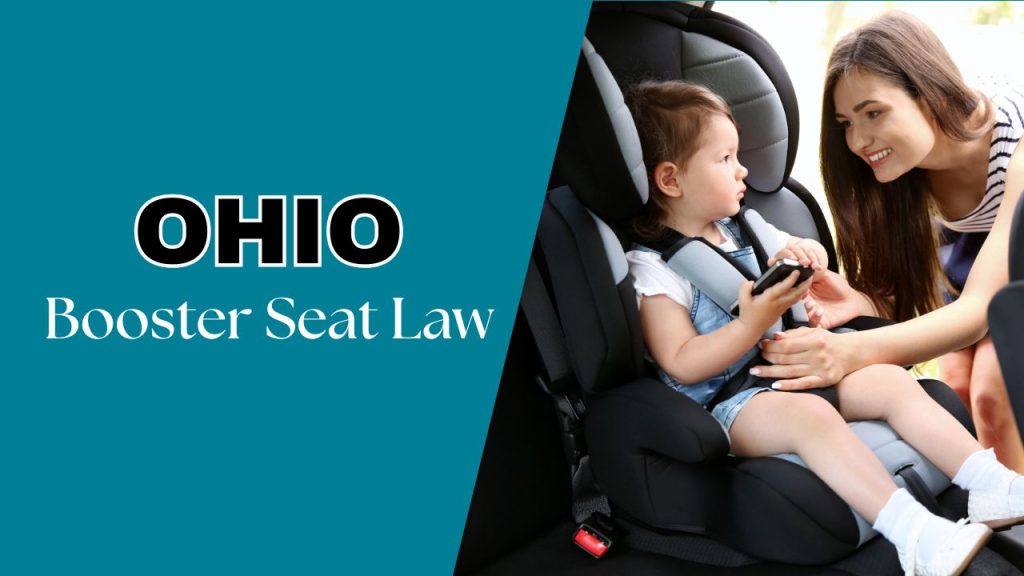
Buckling up your child correctly is one of the simplest ways to keep them safe on Ohio roads.
Every parent driving in the Buckeye State should understand Ohio law for booster seats before their next trip to Columbus, Cleveland, or Cincinnati, since the rules directly affect how and when your child can move out of a car seat.
What Ohio Revised Code 4511.81 Requires
Ohio’s child passenger safety rules come from Ohio Revised Code 4511.81. This statute lays out a step by step progression based on a child’s age, weight, and height rather than a single blanket rule.
Car Seats for Younger Children
Children under 4 years old, or under 40 pounds, must ride in a car seat that meets federal safety standards. The seat should be installed according to the manufacturer’s instructions, and children under 4 must ride in the back seat whenever one is available.
Booster Seat Requirements
Once a child outgrows their forward facing car seat, Ohio law requires them to use a booster seat.
This applies to kids who are under 8 years old and shorter than 4 feet 9 inches. The booster raises a child so the vehicle’s lap and shoulder belt sits correctly across the thighs and chest instead of the stomach and neck.
When Kids Can Move to a Seat Belt
A child can transition out of the booster once they turn 8 or reach 4 feet 9 inches, whichever happens first. From that point through age 15, Ohio requires every child to wear a standard seat belt.
Why Height Matters More Than Age
Many Ohio parents assume age alone decides when a booster is no longer needed. A child who turns 8 but is still well under 4 feet 9 inches has not yet reached the height where a seat belt fits safely on its own.
Sitting too small for the belt can cause the lap belt to ride up onto the abdomen or the shoulder belt to cut across the neck, both of which raise injury risk in a crash.
Fines and Enforcement in Ohio
A first violation of the child restraint law typically carries a fine of up to 75 dollars. Ohio courts are required to waive that fine if a parent shows proof of purchasing, renting, or borrowing an appropriate car seat or booster before the court date. This is a primary enforcement law, meaning an officer can stop a vehicle solely because a child appears improperly restrained.
Exemptions Worth Knowing
Taxis are exempt from the child restraint requirement, but rideshare vehicles like Uber and Lyft are not.
Families with a documented medical condition may qualify for an exemption if a licensed physician provides a signed statement kept in the vehicle.
Local Resources for Ohio Families
Parents in Columbus, Cincinnati, Cleveland, and Akron can get free car seat inspections through children’s hospitals and Safe Kids Ohio coalitions.
A certified technician can confirm your booster is installed correctly and appropriate for your child’s current height and weight.
Final Thoughts for Ohio Parents
Understanding Ohio law for booster seats helps you avoid fines and, more importantly, keeps your child properly protected. When your child is close to the age or height cutoff, err on the side of keeping them in the booster a little longer for a safer ride.