
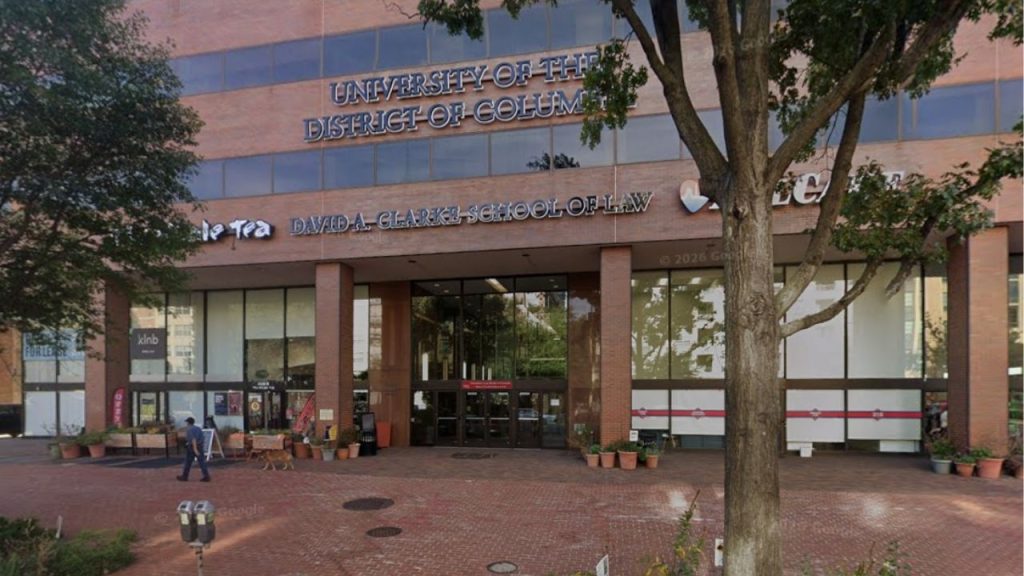
Applying to law school means understanding your odds before you invest time and money into the process. The UDC law school acceptance rate is one of the most searched data points among prospective students considering the University of the District of Columbia David A. Clarke School of Law, and for good reason. This guide breaks down admitted student scores, class size, and practical strategies to strengthen your application.
Overview of This Law School
UDC David A. Clarke School of Law is a public, ABA-accredited law school located in Washington, D.C. It is known for its strong public interest focus, clinical legal education model, and commitment to training lawyers who serve underrepresented communities. Tuition tends to be lower than many private law schools, making it an attractive option for students focused on affordability and hands-on legal training.
Because the school emphasizes access and public service, its admissions approach often looks beyond raw numbers, considering an applicant’s background, motivation, and potential for community impact.
Admitted Students’ Score Range
LSAT Scores
Recent entering classes at UDC Law have shown a median LSAT score in the high 140s to low 150s, with the middle 50 percent range typically spanning a few points on either side.
GPA Range
The median undergraduate GPA for admitted students has generally fallen between 3.0 and 3.3, with the middle 50 percent range extending slightly below and above that band depending on the cycle.
These figures shift year to year based on applicant pool strength and class needs, so treat them as directional rather than exact.
Class Size and Acceptance Rate
UDC Law enrolls a relatively small class each year, typically in the range of 90 to 130 students. Recent admissions cycles have received several hundred applications, with an overall acceptance rate that has generally ranged from the high 30s to the low 50s in percentage terms.
This is notably higher than many law schools nationally, which reflects the school’s mission-driven, access-oriented admissions philosophy rather than a purely numbers-based approach.
How to Increase Your Chances of Acceptance
LSAT Prep Strategy
Start with a diagnostic test to identify weak areas early. Dedicate structured study time over two to three months, focusing on logical reasoning and reading comprehension, since these sections carry significant weight. Consistent timed practice tests help build stamina and pacing.
Personal Statement Advice
UDC Law values applicants who can speak to public service, resilience, or community engagement. Use your personal statement to connect your background to the school’s mission, and avoid generic essays that could apply to any law school.
Letters of Recommendation
Choose recommenders who know your work ethic and character well, such as professors or supervisors who can speak to specific examples. Academic letters carry particular weight if you are a recent graduate.
Work Experience
Relevant experience in advocacy, nonprofit work, government, or community organizing can strengthen an application, especially given the school’s public interest orientation.
Application Timing
Applying early in the cycle, ideally in the fall before the following academic year, generally improves your chances since many schools use rolling admissions.
Final Thoughts and Quick Summary
UDC David A. Clarke School of Law offers a more accessible path into legal education, particularly for students committed to public interest work. With a moderate acceptance rate, modest median LSAT and GPA benchmarks, and a mission-driven review process, applicants who present a clear narrative and solid preparation have a realistic shot at admission.
Admissions statistics vary from year to year and can change based on applicant pool size and institutional priorities. For the most accurate and current figures, readers should confirm details through UDC Law’s official admissions page and the school’s ABA 509 disclosure report. This article is for informational purposes only and does not constitute admissions or legal advice.