
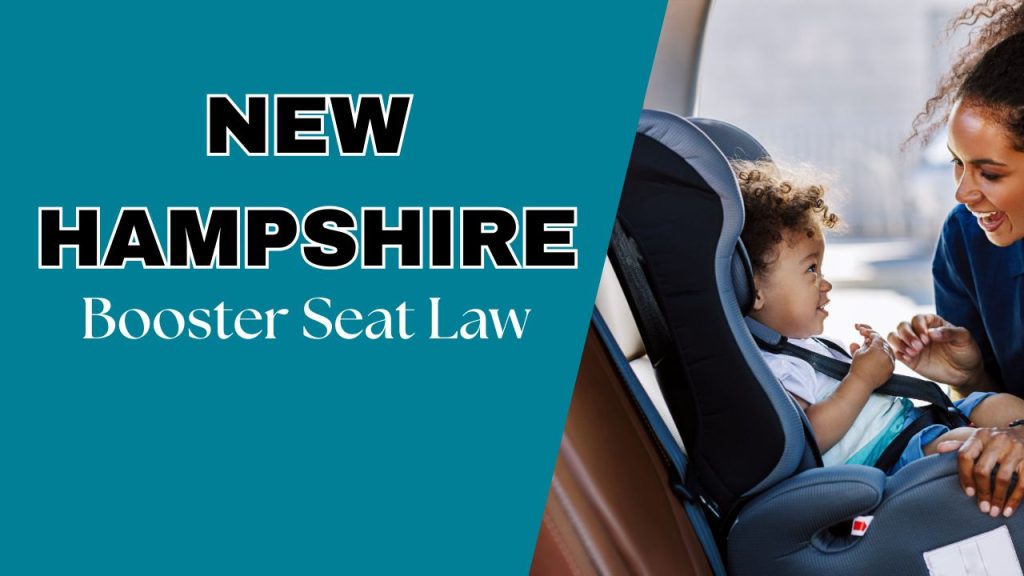
Every parent buckling up a child in the Granite State needs a clear answer to one question, and the New Hampshire law for booster seats gives it: children under 7 years old, or under 57 inches tall, must ride in a federally approved child restraint system.
Whether you live in Manchester, Nashua, or a small town near the Lakes Region, this guide breaks down exactly what the law requires and how to stay compliant.
What RSA 265:107-a Actually Requires
New Hampshire’s child passenger law is codified under RSA 265:107-a. It sets three age-based stages that every parent should know.
Under Age 2: Rear-Facing Only
Children younger than 2 must ride in a rear-facing child restraint system that meets federal safety standards under 49 C.F.R. 571.213. This requirement took effect January 1, 2024, aligning New Hampshire with national pediatric safety guidance.
Under Age 7 or Under 57 Inches
Once a child turns 2, they typically move into a forward-facing harness seat, then a booster seat. The law requires any child under 7 years old who is shorter than 57 inches to remain in an approved child restraint system.
If your child reaches 57 inches before turning 7, the restraint requirement no longer applies, though a seat belt is still mandatory.
Ages 7 to 17: Seat Belt Required
Once a child ages out of the booster requirement, New Hampshire law still requires them to wear a properly fitted seat belt until age 18.
Why New Hampshire’s Law Feels Different
New Hampshire is famous for having no seat belt law for adults, the only state in the country with this distinction. That exception, though, does not extend to minors.
Children and teenagers under 18 must always be properly restrained, regardless of how relaxed the adult seat belt rule is.
Choosing the Right Booster Seat
New Hampshire does not require a specific booster style. Any seat meeting FMVSS 213 standards is legal. Parents generally choose between two types.
High-Back Boosters
These provide built-in head and side support, which is especially useful in vehicles without high seat backs.
Backless Boosters
These simply raise the child so the vehicle’s seat belt fits correctly across the chest and thighs.
Penalties for Noncompliance
Failing to properly restrain a child passenger is a traffic violation. A first offense carries a $50 fine, and a second offense increases to $100.
Checking Seat Expiration and Safety
Booster seats degrade over time from heat, sunlight, and general wear. Most seats have a six to ten year lifespan from the manufacture date, stamped on the shell.
Before using a hand-me-down booster, confirm it has never been in a moderate or severe crash, has no recalls, and still includes its original labels and instructions.
Where New Hampshire Families Can Get Help
The Be Seat Smart NH program offers free car seat checks and fitting stations across the state, staffed by certified Child Passenger Safety Technicians.
If you are unsure whether your child has outgrown their booster, a quick fitting check can confirm the safest option.
Final Takeaway for New Hampshire Parents
The New Hampshire law for booster seats sets the legal minimum, but safety experts recommend keeping children in a booster until the vehicle seat belt fits correctly on its own, typically around 4 feet 9 inches tall. When in doubt, size and fit matter more than age alone.